Inside the Walls: Invading Dubrovnik
The bus from Mostar took three and a half hours, and you could watch the landscape soften as we dropped in elevation toward the Adriatic. With the air warming, the wool beanie I’d bought in Sarajevo disappeared into my backpack — hopefully for the rest of the trip.
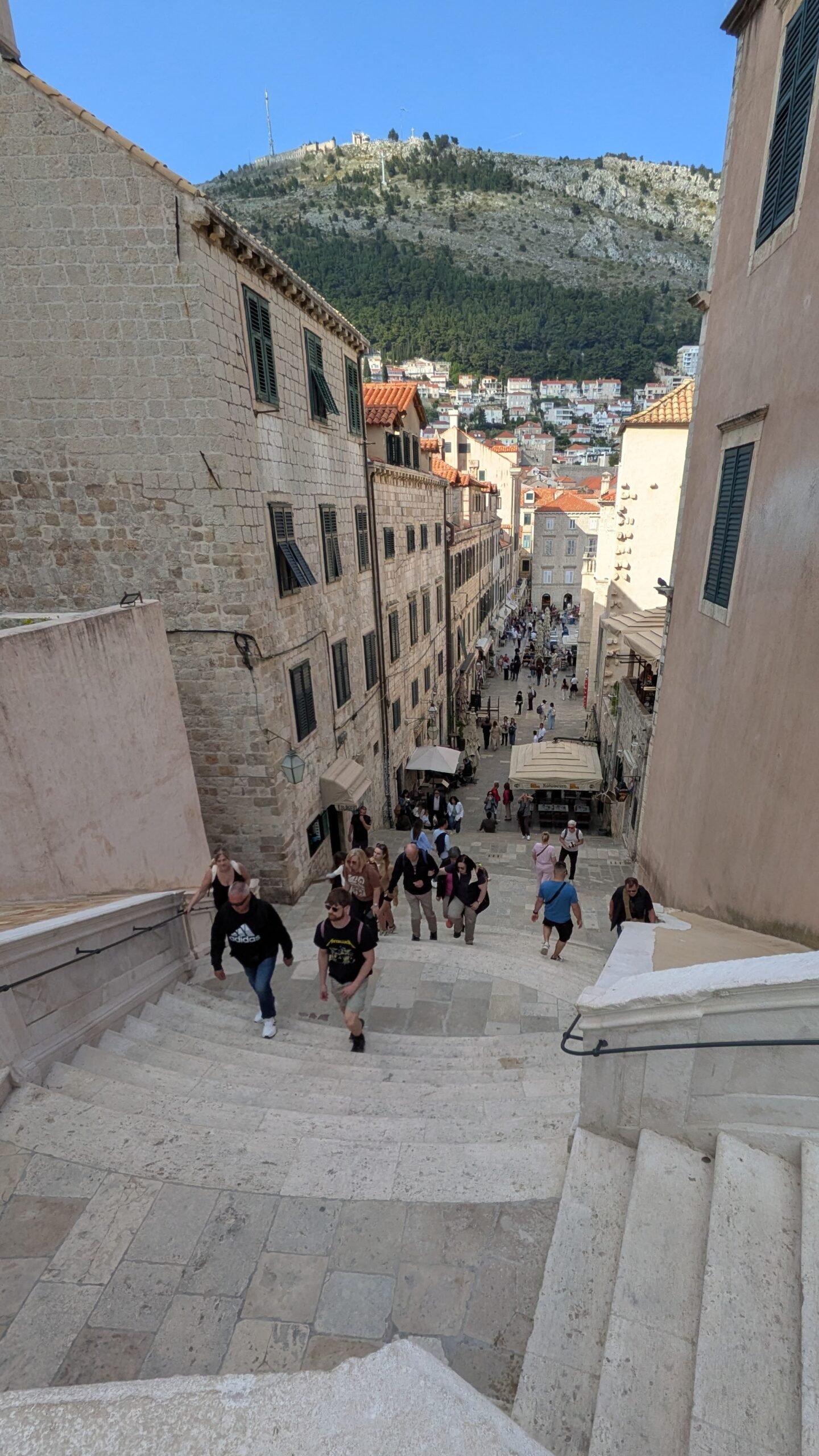
I arrived to a perfect 60°F (16°C) afternoon and a room tucked inside Dubrovnik’s Old Town walls, up a steep flight of stairs in a building constructed shortly after the devastating 1667 earthquake that leveled much of the city and claimed nearly 3,000 lives. That’s the deal with staying inside the walls: you get the history, and you get a workout. Stairs, stairs, and more stairs. No cars. No Uber.
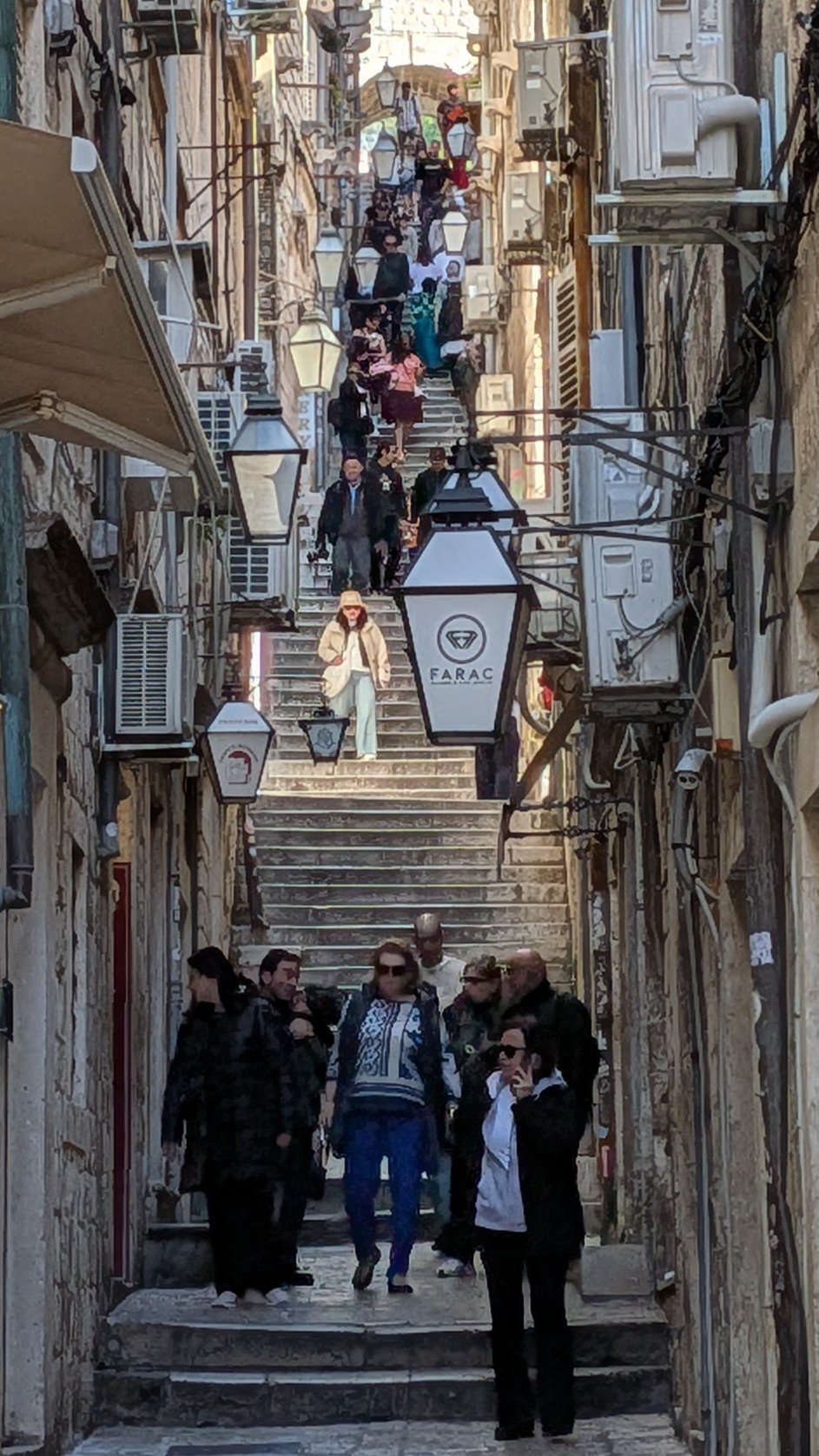
I was just half a block from the Jesuit Stairs, now better known to millions as the “Walk of Shame” staircase from Game of Thrones. Not the worst landmark to have outside your front door.
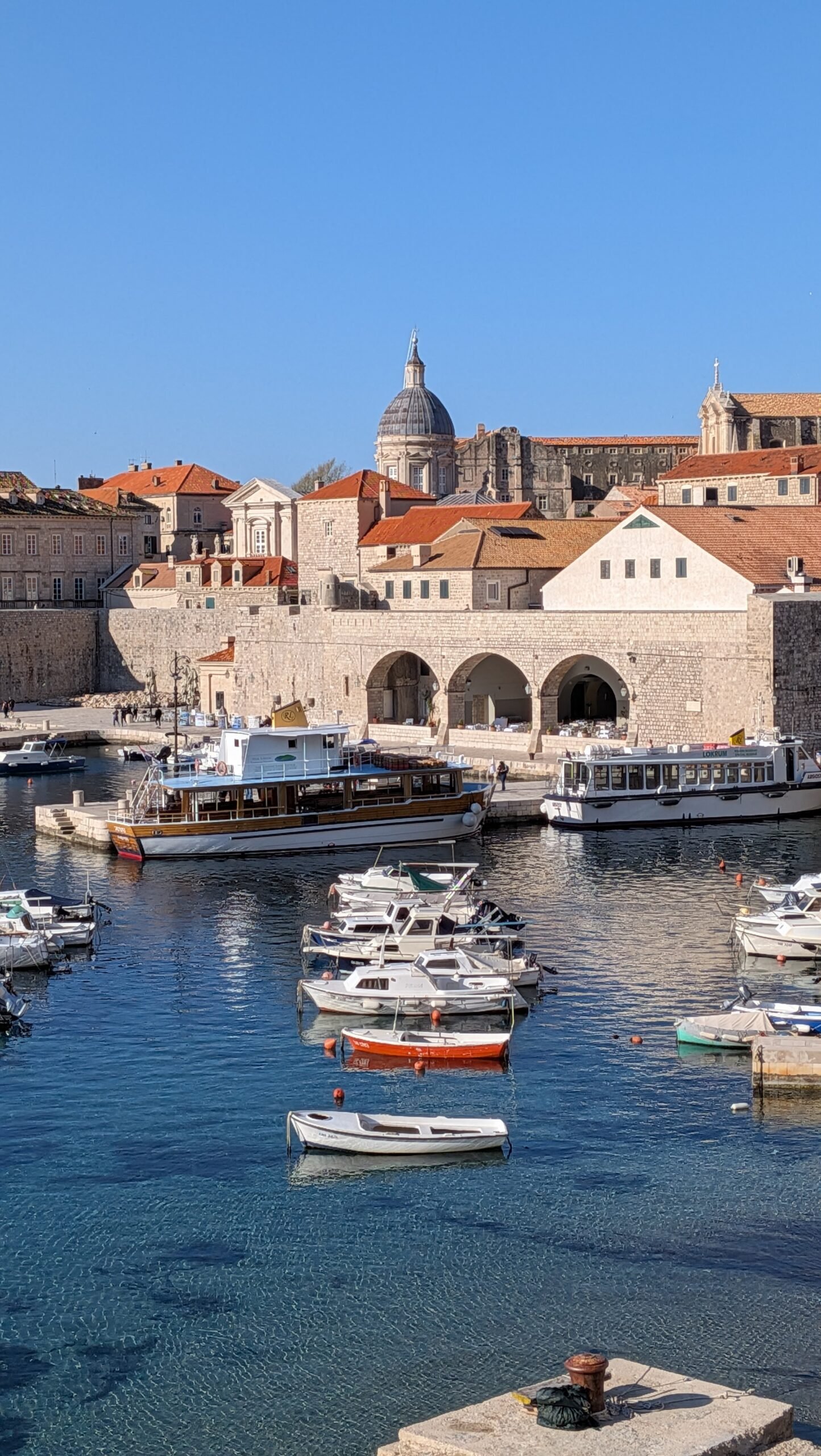
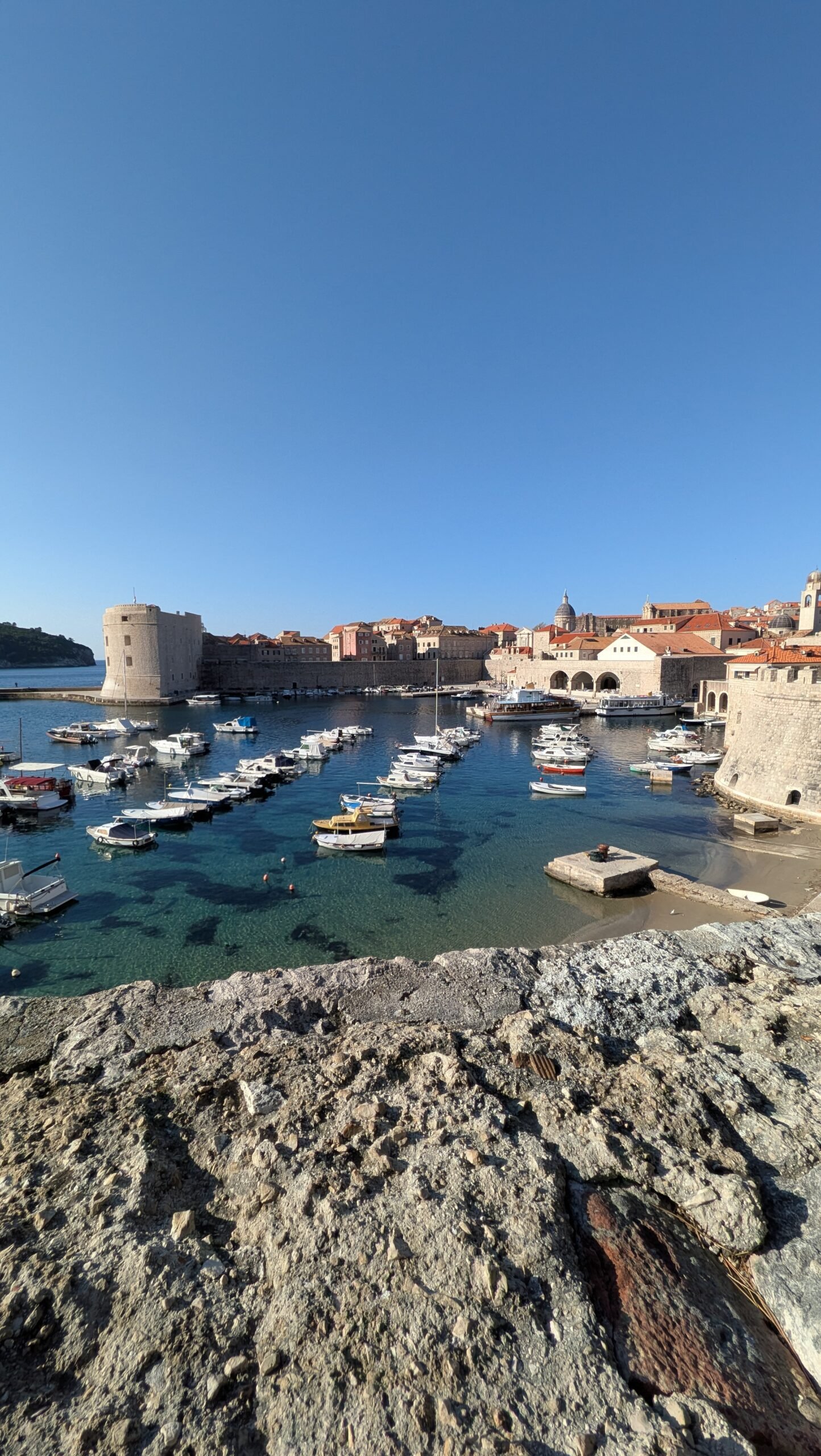
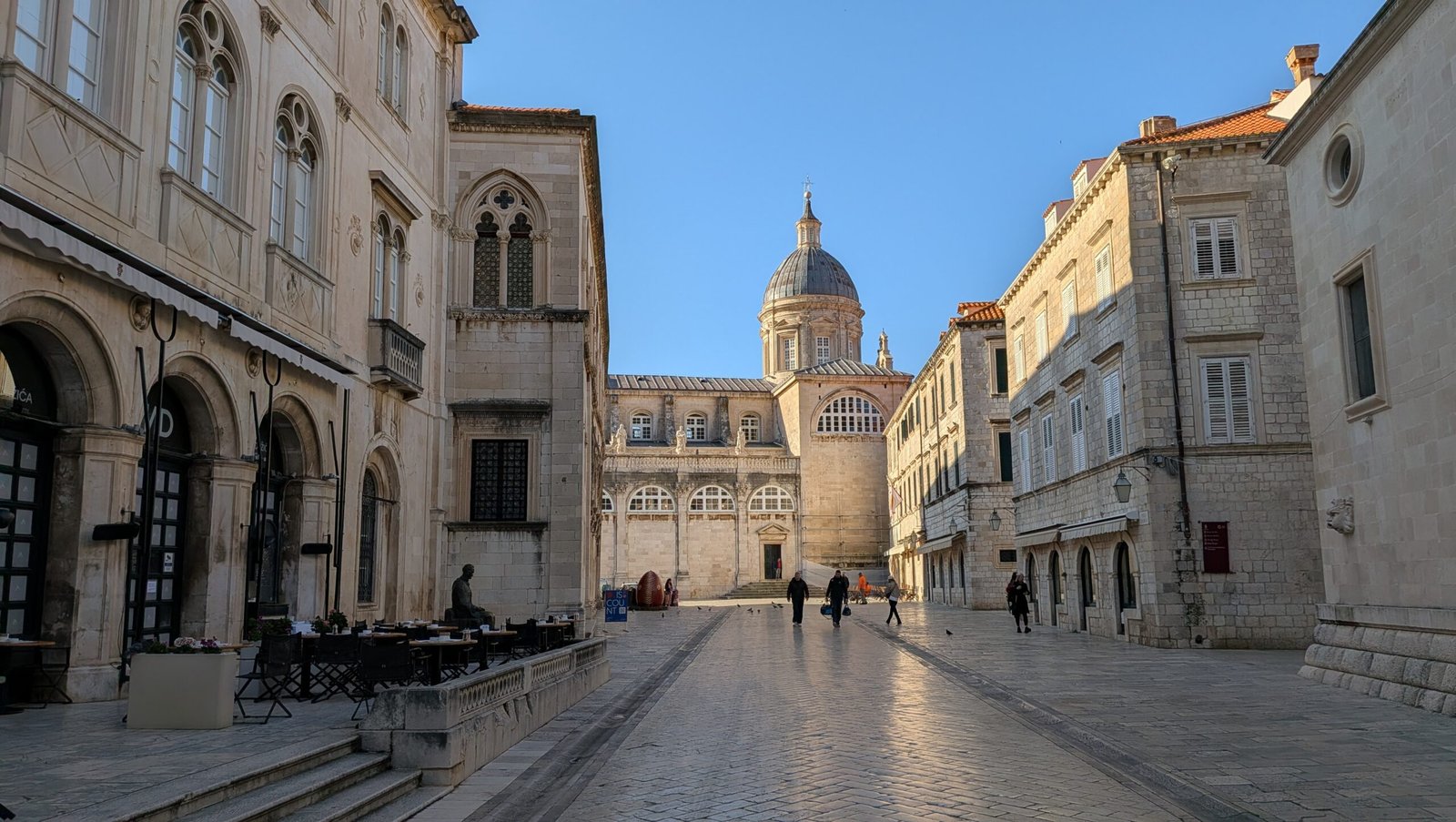
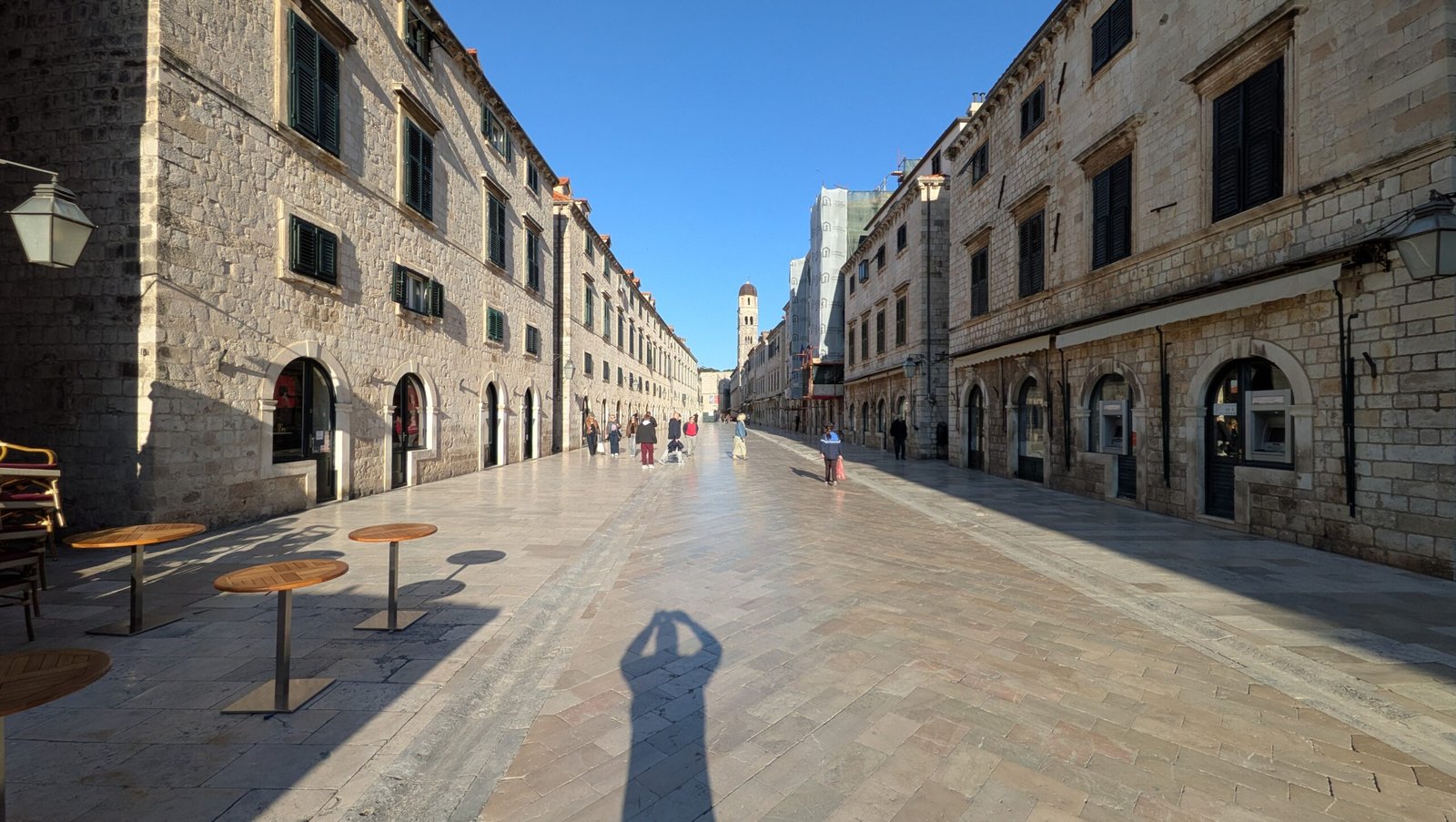
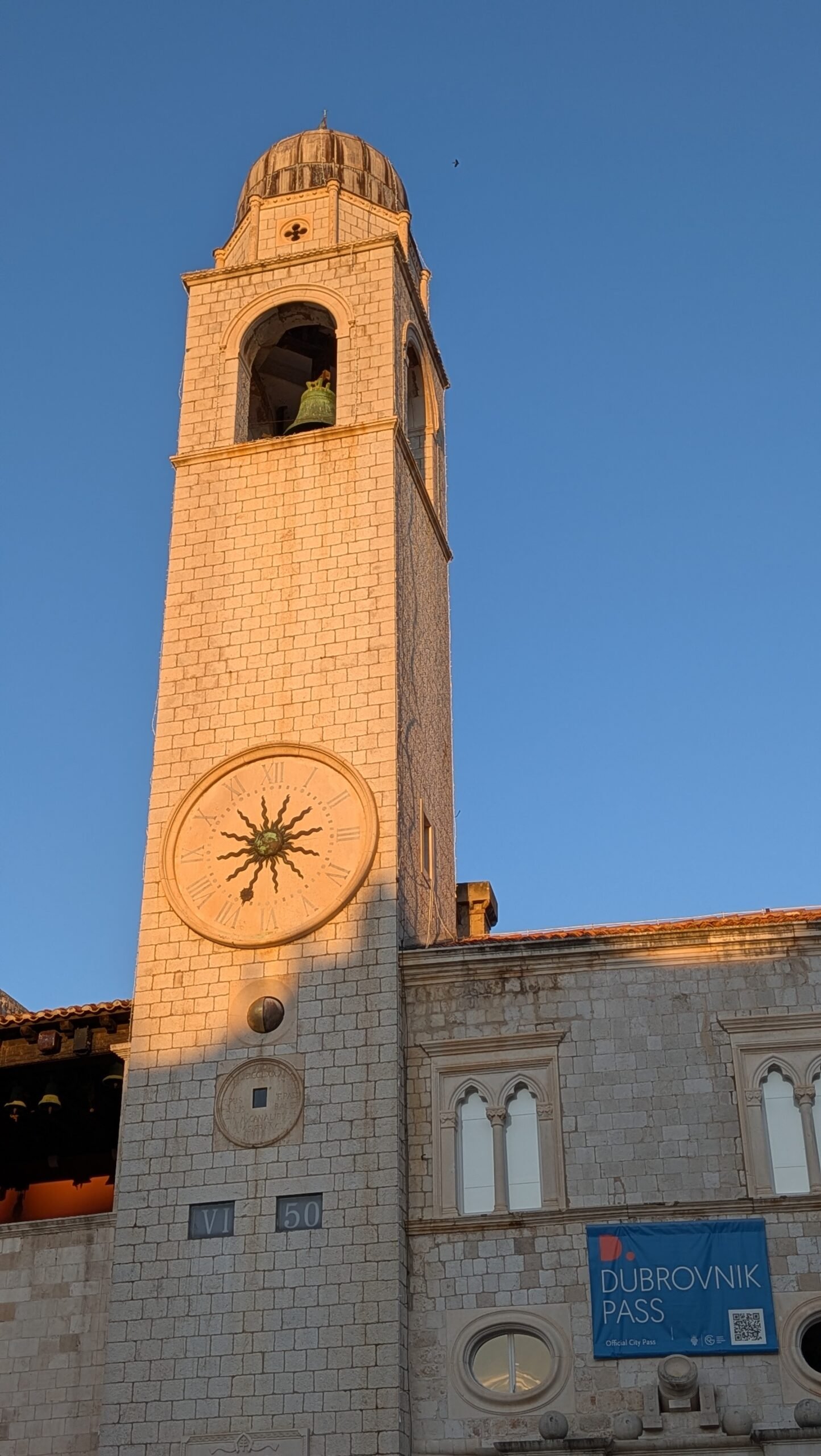
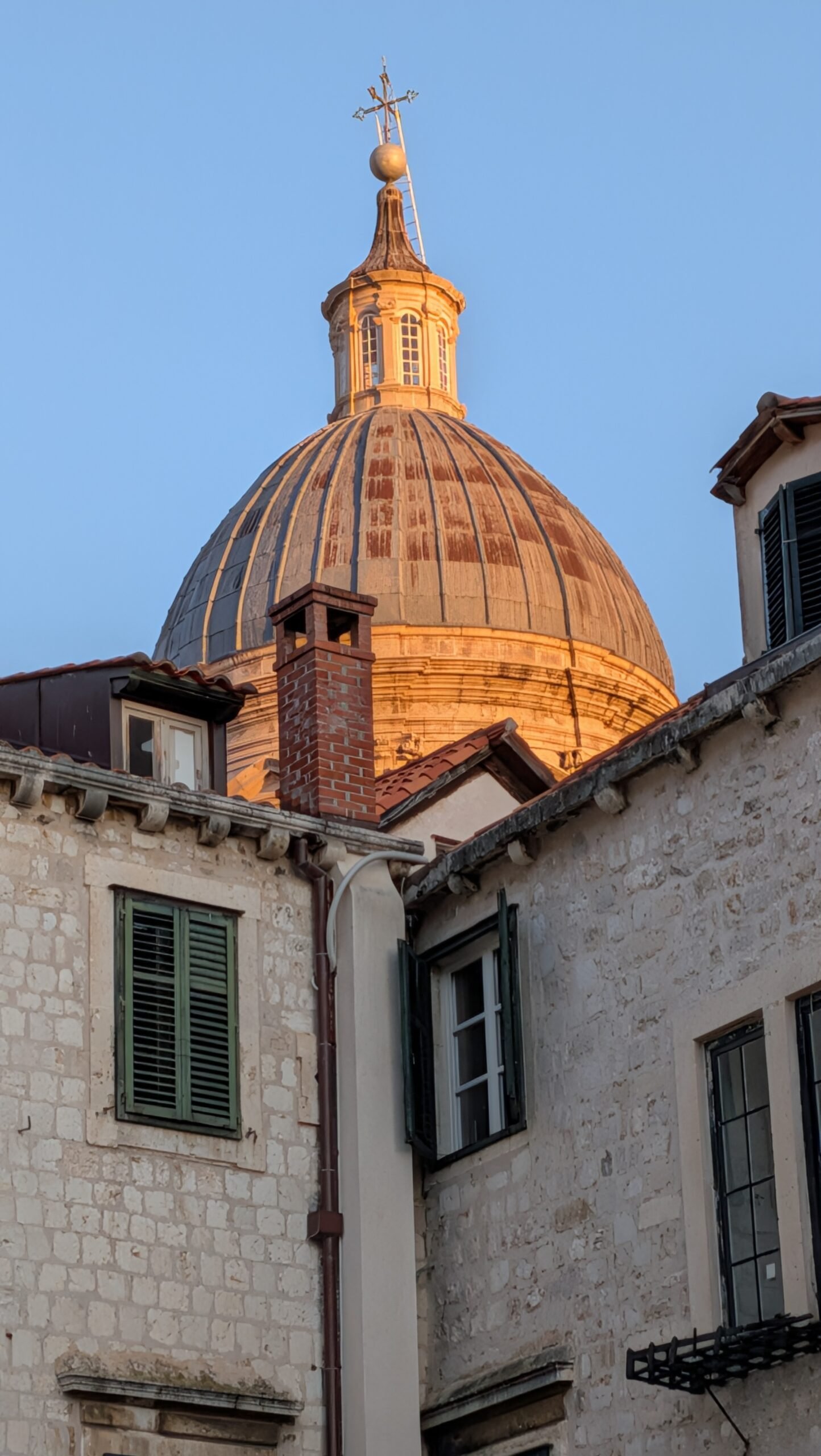
Dubrovnik earned UNESCO World Heritage status in 1979, and walking its polished limestone streets, it’s easy to understand why. Once the independent Republic of Ragusa, this tiny maritime power rivaled Venice, growing wealthy by moving salt, silver, wool, and spices between the Mediterranean and the Balkan interior. That prosperity built the city I was now happily climbing through.
By day, thousands poured through the gates from cruise ships and tour buses. Boutiques sold luxury goods, restaurants posted tourist prices, and admission fees did little to discourage the crowds lining up to walk the massive stone walls that once defended the city from invading armies. The gates that had kept marauders out for centuries now stood wide open for a different kind of invasion — tourists and their wallets.
By evening, everything changed.
As the cruise passengers drifted back to their ships and the day-trippers disappeared, Dubrovnik relaxed. The roughly 1,200 people who still call the Old Town home — along with those of us fortunate enough to spend the night within its walls — finally got to experience the city at its best.
One evening I found myself at the tiny Glam Craft Beer Bar, tucked down a narrow alley just off the Stradun. Behind the bar, Mateo and Izaja poured Croatian craft beers while travelers from around the world traded stories late into the evening. Then I noticed something completely unexpected — three bottles of Fortaleza tequila sitting behind the bar.
For tequila enthusiasts, Fortaleza has achieved near-legendary status. Who was I to resist? After a shot of Fortaleza and a few Croatian craft beers, the journey back to my room ironically included Dubrovnik’s famous Walk of Shame. Fortunately, there were no dragons — or ringing bells — waiting for me.
Dubrovnik has become one of Europe’s most sought-after destinations, welcoming more than 2.5 million visitors each year, including over half a million cruise passengers. Its starring role as King’s Landing in Game of Thrones only accelerated its popularity. Visiting in April, the Old Town buzzed with people from every corner of the globe. I could only imagine what July and August must feel like.
Like Venice, Barcelona, and other cities wrestling with overtourism, Dubrovnik has begun fighting back. Cruise ship arrivals are now limited, with no more than two ships scheduled at one time, and officials continue encouraging visitors to come during the shoulder seasons instead of the peak summer months.
If you’re planning a visit, do yourself a favor: book well in advance, stay within the walls if your budget allows, and explore early in the morning or after the day-trippers have gone home. Those are the hours when Dubrovnik feels less like a world-famous attraction and more like the remarkable medieval city it has been for centuries.
If you’d like to learn more about Dubrovnik and Croatia, I highly recommend Ron and Mary James’ extensive coverage in the Winter/Spring 2024 issue of Wine Dine & Travel magazine.
Easter in Dubrovnik
Kotor: Cats and Castles
From here the itinerary turned into a five-day stretch of near-constant motion — Montenegro, Albania, North Macedonia. Five straight travel days and two border crossings. And a land border by bus is never just one stop — you check out of one country, ride a few hundred meters of no-man’s-land, then line up all over again to check into the next. I know better than to stack days like that. I did it anyway because the goal was Lake Ohrid in time for Orthodox Easter, and the alternative was one or two brutal marathon travel days instead of several shorter ones. That’s the trade-off you make.
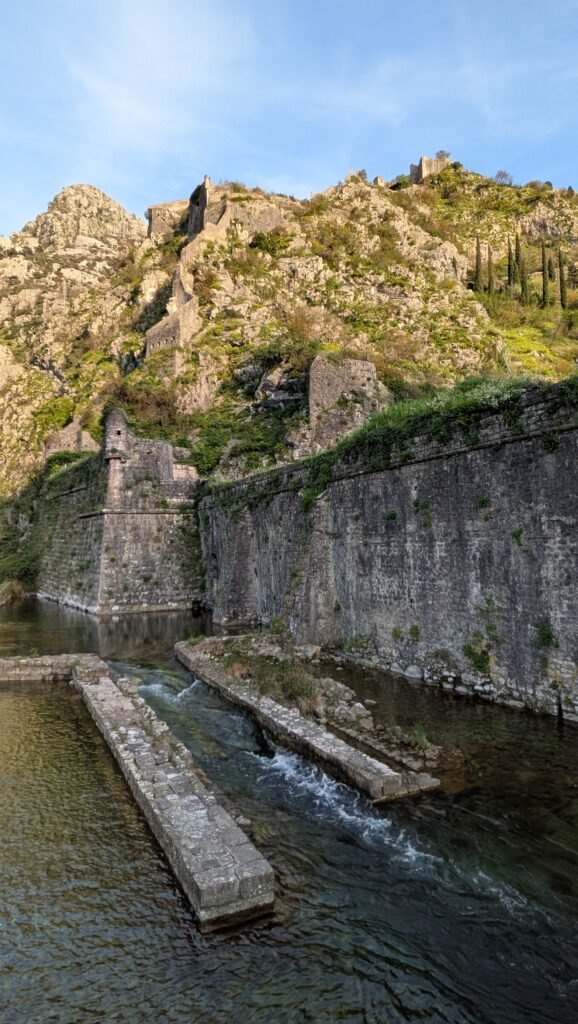
Kotor was the first stop, tucked into a bay that looks more like a Norwegian fjord than anything you’d expect on the Adriatic—steep mountains rising almost straight out of the water, an Old Town enclosed within medieval walls, and streets that haven’t changed much in centuries.
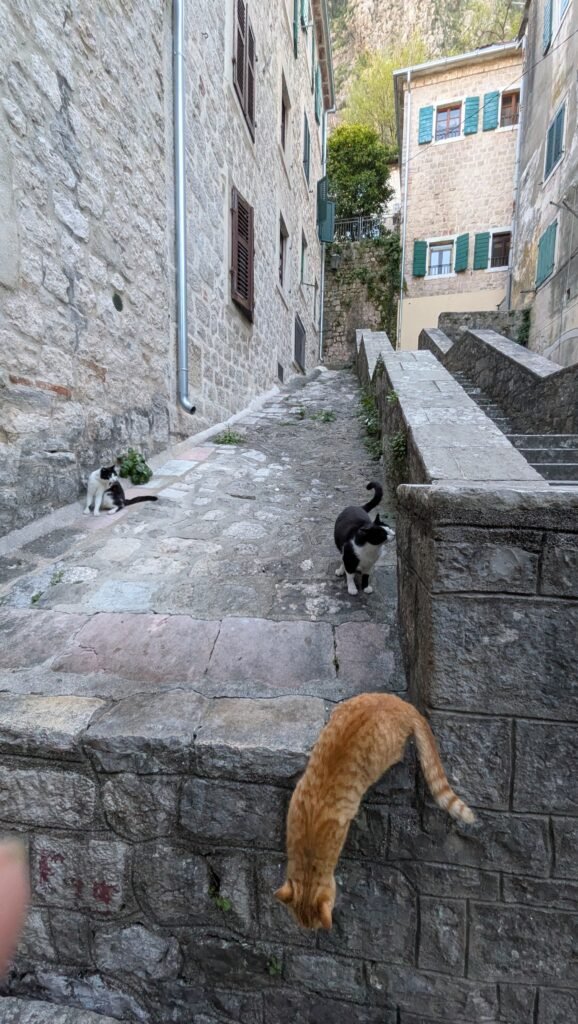
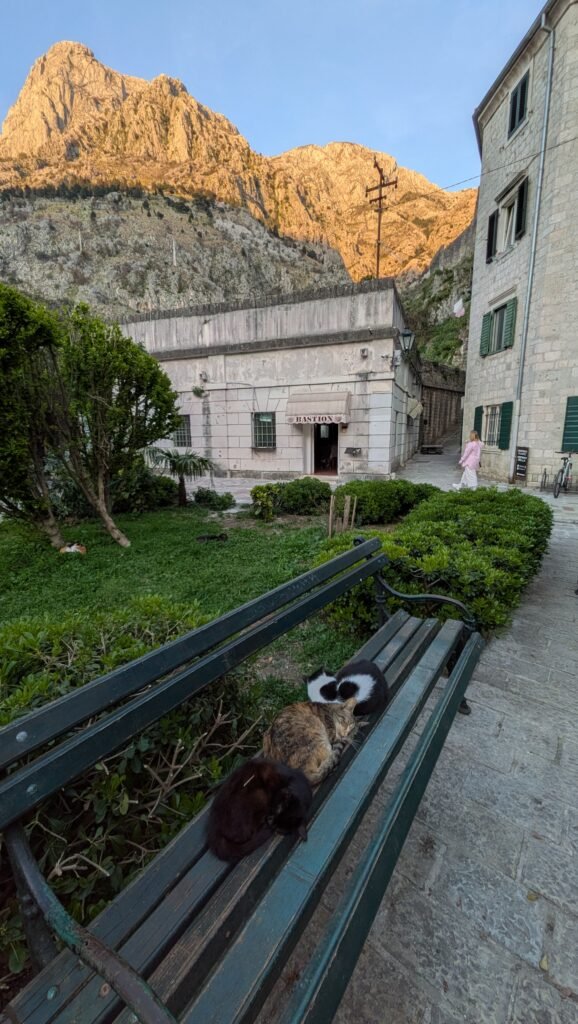
And cats.
Everywhere.
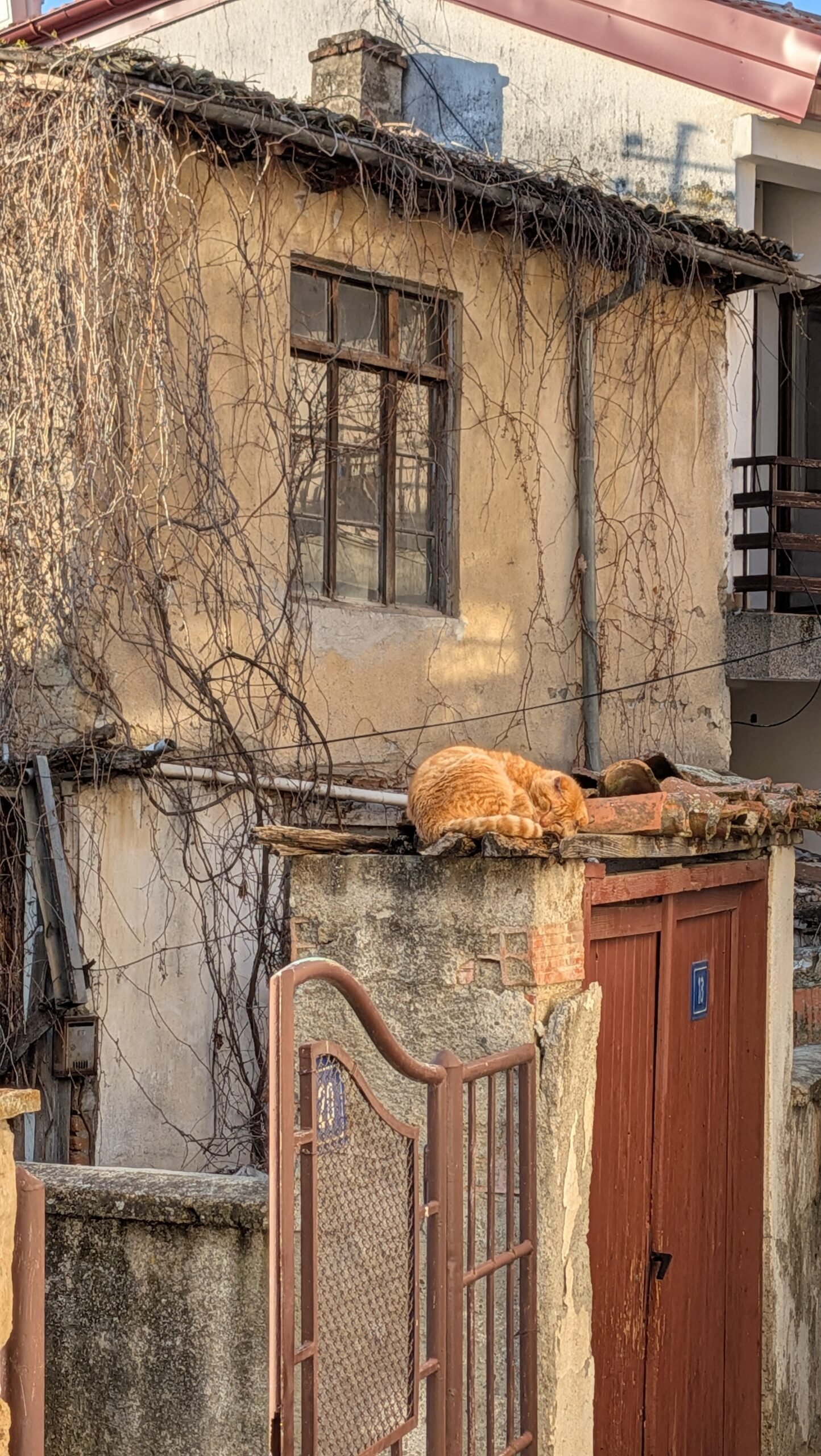
Perched in doorways. Curled up in sunny corners. Stretched across stone squares. Wandering the alleyways like they own the place—which, in a sense, they do. Sailors originally brought them here to keep rats off their ships and the docks. The ships disappeared. The cats stayed. Today, locals feed and care for them, making them the city’s unofficial mascots and a living reminder of Kotor’s seafaring past.
The city’s history stretches from Roman and Byzantine roots through centuries as a Venetian stronghold, which gave Kotor its imposing walls and much of its architecture, before passing through Austrian, Napoleonic, and Austro-Hungarian rule on its way to becoming part of Yugoslavia.
Standing there, it occurred to me that this was my third UNESCO World Heritage Site in a row — Mostar, Dubrovnik, and now Kotor.
High above the Old Town, the Fortress of San Giovanni zigzags up the mountainside, its stone walls clinging impossibly to the cliffs. I admired it from below, considered the 1,300-plus steps to the top… and decided some historical sites are best appreciated from a distance.
Into Albania: Young Travelers and a Change of Rhythm
Leaving Kotor came with one last reminder of what these old towns actually are — beautiful, but not always built for modern plumbing. No water that morning. No shower, no sink, nothing. Just one of those “well, okay then” travel moments you shrug off and move past.
The bus ride into Albania climbed from the Adriatic up into the Dinaric Alps, and somewhere along the way I fell in with a run of twenty-somethings — kids from Spain, Latvia, and Poland at the station, then Nora from North Carolina, Deia and Evie from New York, and Oliver from Denmark on the bus itself. Solo travel does that. You can go a day or two barely speaking to anyone, and then suddenly you’re in the middle of a conversation with strangers who feel, for a few hours, like companions. It’s still the best argument for traveling alone that I know.
Shkodër, when we arrived, felt like an upgrade in every practical sense — space, comfort, water pressure, none of the 500-year-old plumbing quietly plotting against me. And Albania made its value case immediately: a full sit-down dinner, risotto, salad, a glass of wine, for around fifteen dollars. Bicycles were everywhere, woven into daily life rather than treated as a novelty, and the whole place had a calmer, more local rhythm than anywhere I’d been so far on the trip.
Tirana: A Country Rebuilding
Tirana hit differently right away — a capital visibly figuring itself out in real time, cranes and traffic and new buildings everywhere. Close to a quarter of Albania’s population now lives in the greater Tirana metro area, and you can feel that growth pressing against the city’s older bones.
I stayed in Blloku, once a restricted zone reserved for Communist Party elites under Enver Hoxha, who ran one of the most isolated and paranoid regimes on the planet from just after World War II until his death in 1985. Albania cut ties with the Soviet Union, Yugoslavia, and eventually China, leaving itself with no allies and no outside influence at all. Hoxha’s paranoia is still physically scattered across the country — his regime built an estimated 173,000 concrete bunkers across Albania, a construction effort that swallowed more concrete and labor than nearly anything else in the country’s history. Trying to leave could get you killed. For decades, Albanians were essentially sealed inside their own borders.
When communism collapsed around 1991, the release was not gradual. In March and August of that year, tens of thousands of people stormed the port of Durrës and commandeered merchant ships outright. As many as 20,000 people crowded onto a single freighter, the Vlora, and crossed the Adriatic to Italy. Nearly half of all Albanians live abroad today, and a large share of the country’s educated workforce left in the decade after the collapse — a brain drain the country is only now starting to recover from.
Thirty-some years later, Tirana feels cosmopolitan without feeling showy — modern, lively, still becoming whatever it’s going to become. And it’s still remarkably cheap: sausages, pickled vegetables, short ribs, and a beer, sit-down, for under twenty dollars. Albania feels like a place that won’t stay a secret much longer. I left with the Adriatic coast and the Albanian Alps still on my list for a return trip.
Pogradec: The Edge of Lake Ohrid
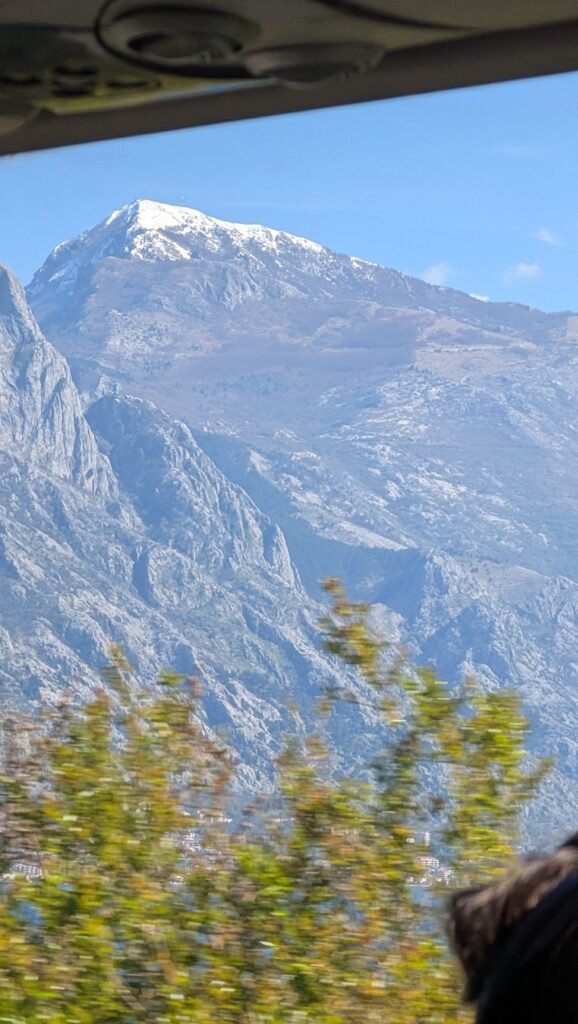
The road to Pogradec climbed and dropped through the Albanian mountains for three hours, peaks opening up on one side and falling away on the other — genuinely exhilarating, no drama, just good scenery sliding past the window.
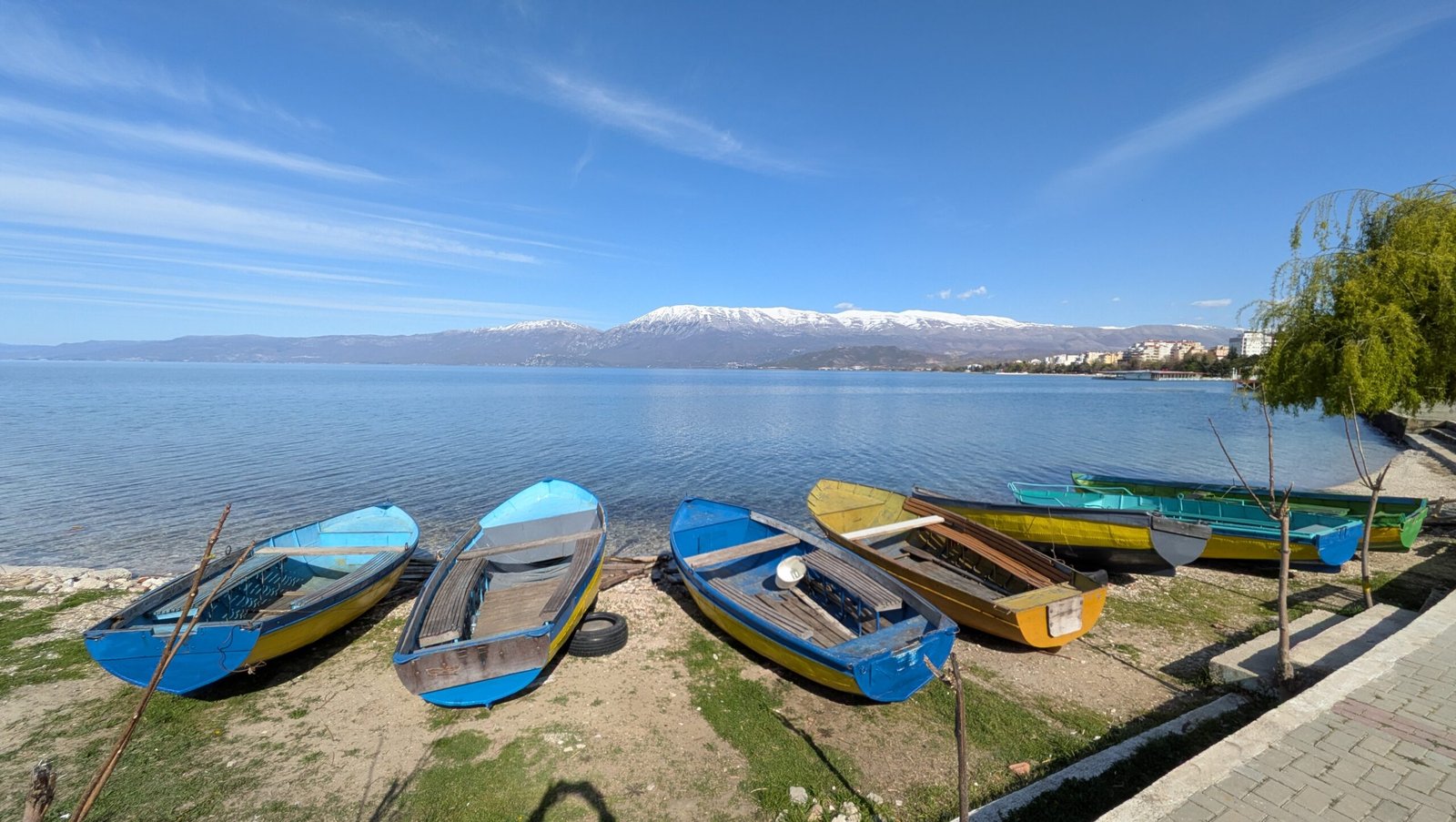
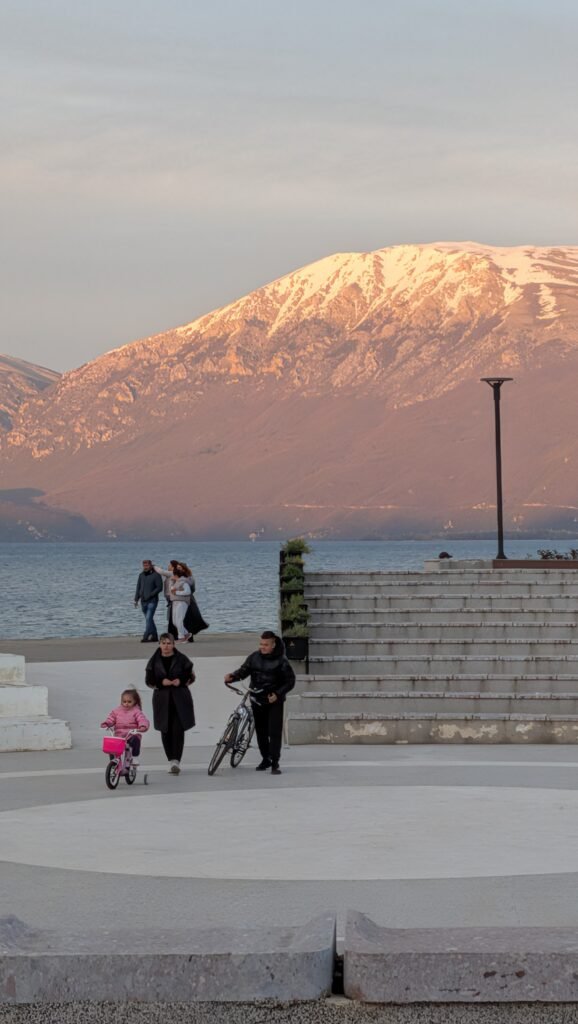
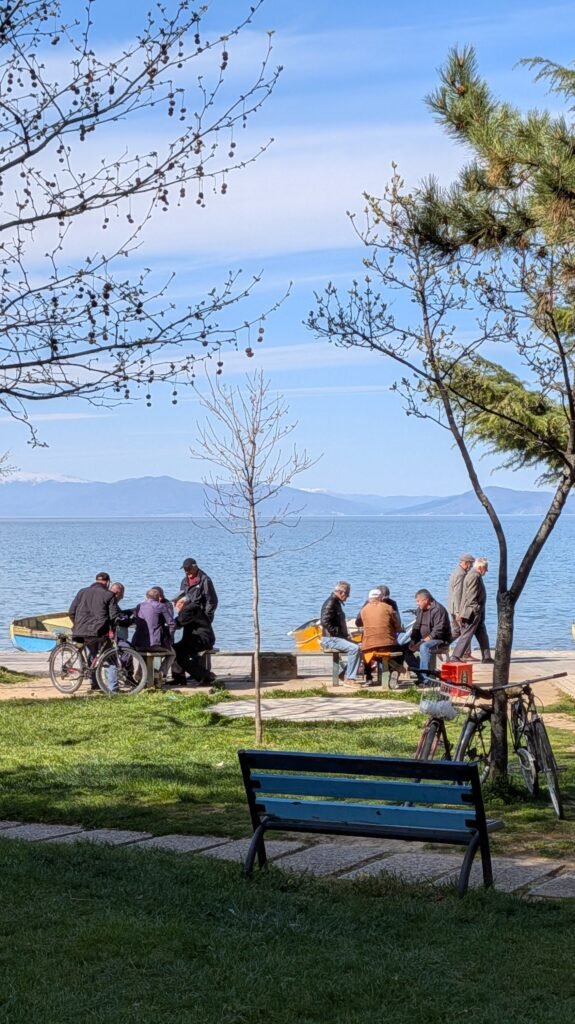
Pogradec sits on Lake Ohrid, a small resort town with roots stretching back to the ancient Illyrians, considered ancestors of modern Albanians. Under Hoxha, it became a summer retreat for the party elite, and the peaceful lakeside promenade I walked was once heavily patrolled against anyone desperate enough to try swimming for Yugoslavia. That history sits just under the surface, easy to miss unless you know to look for it.
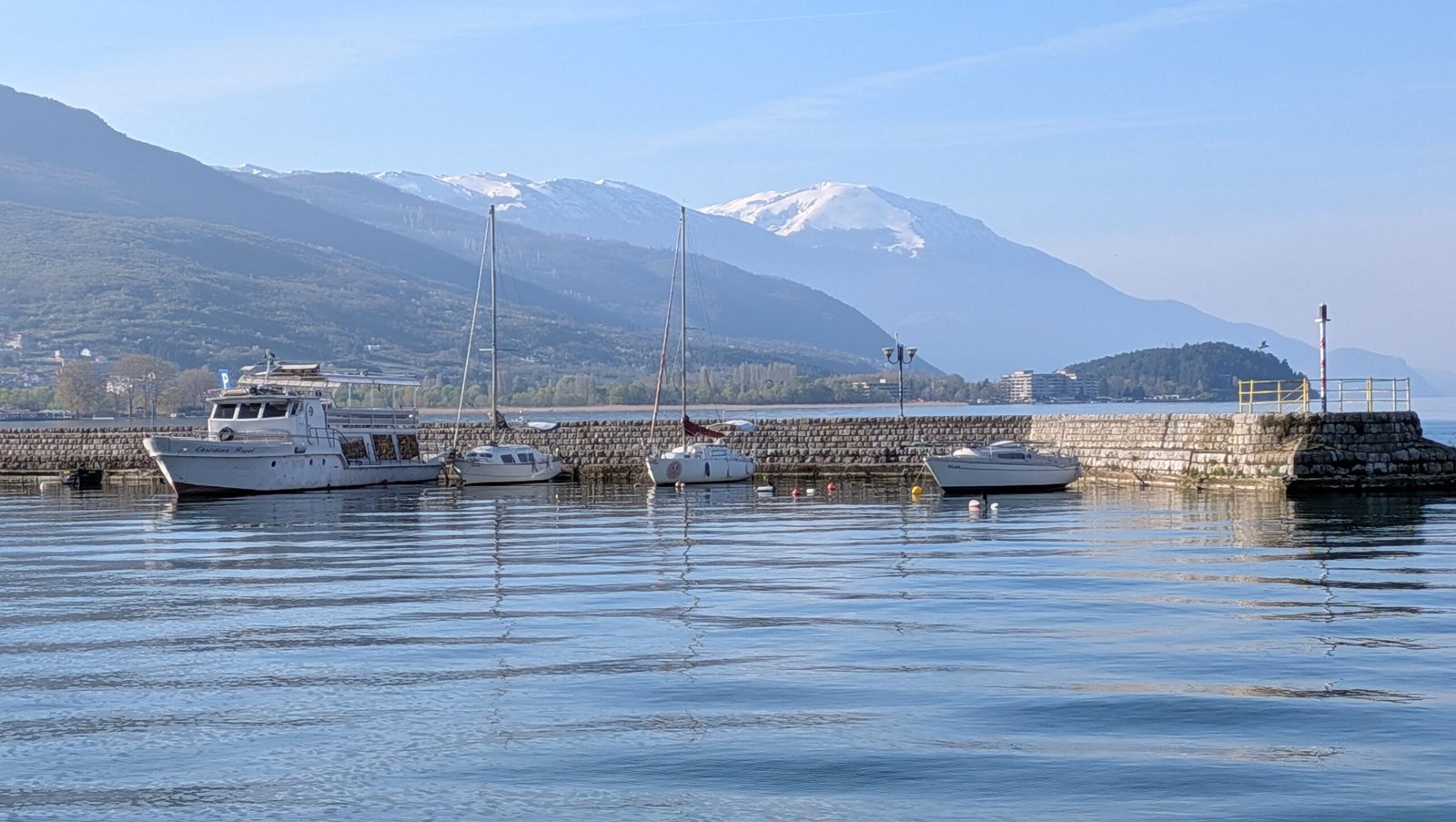
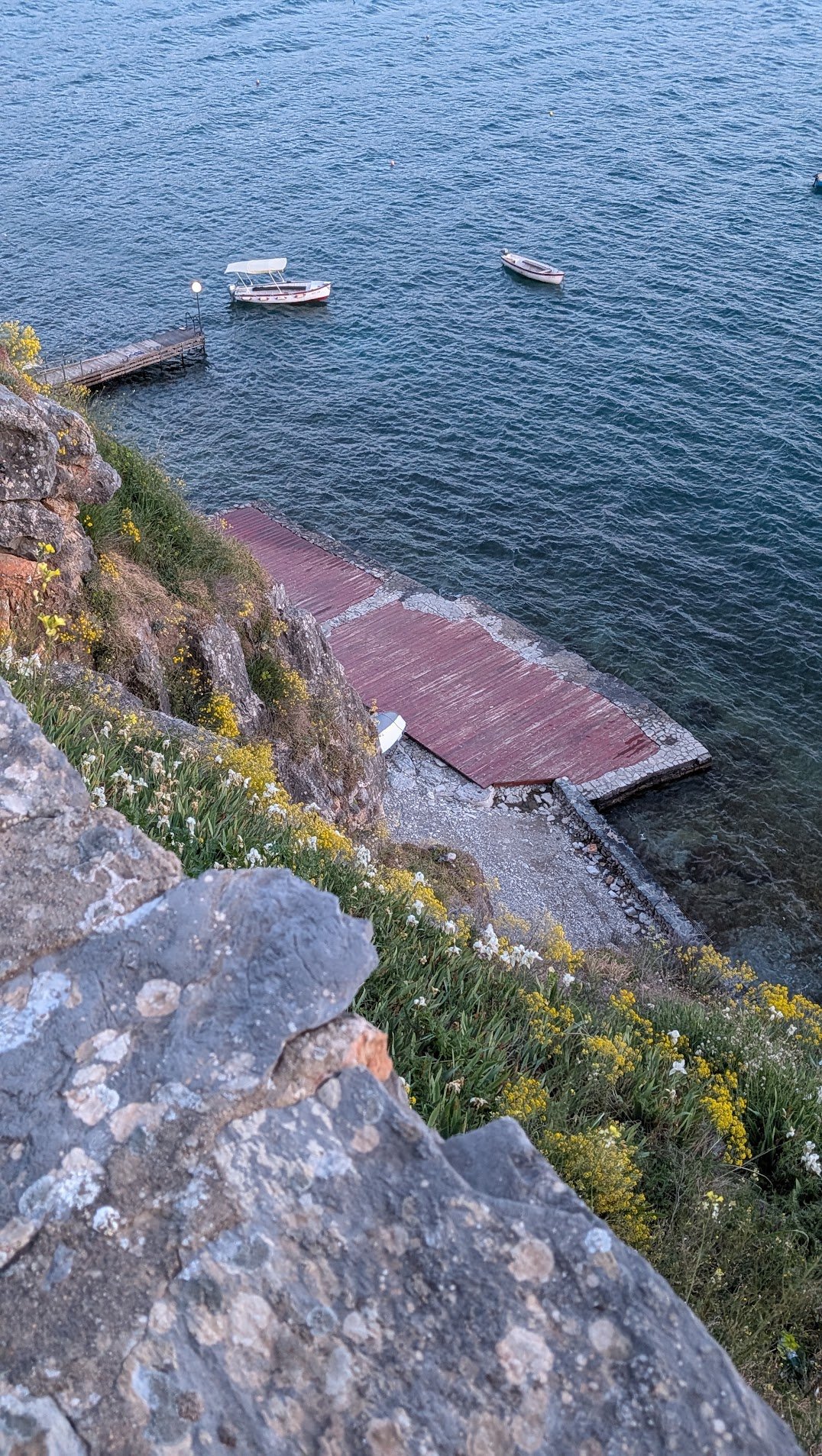
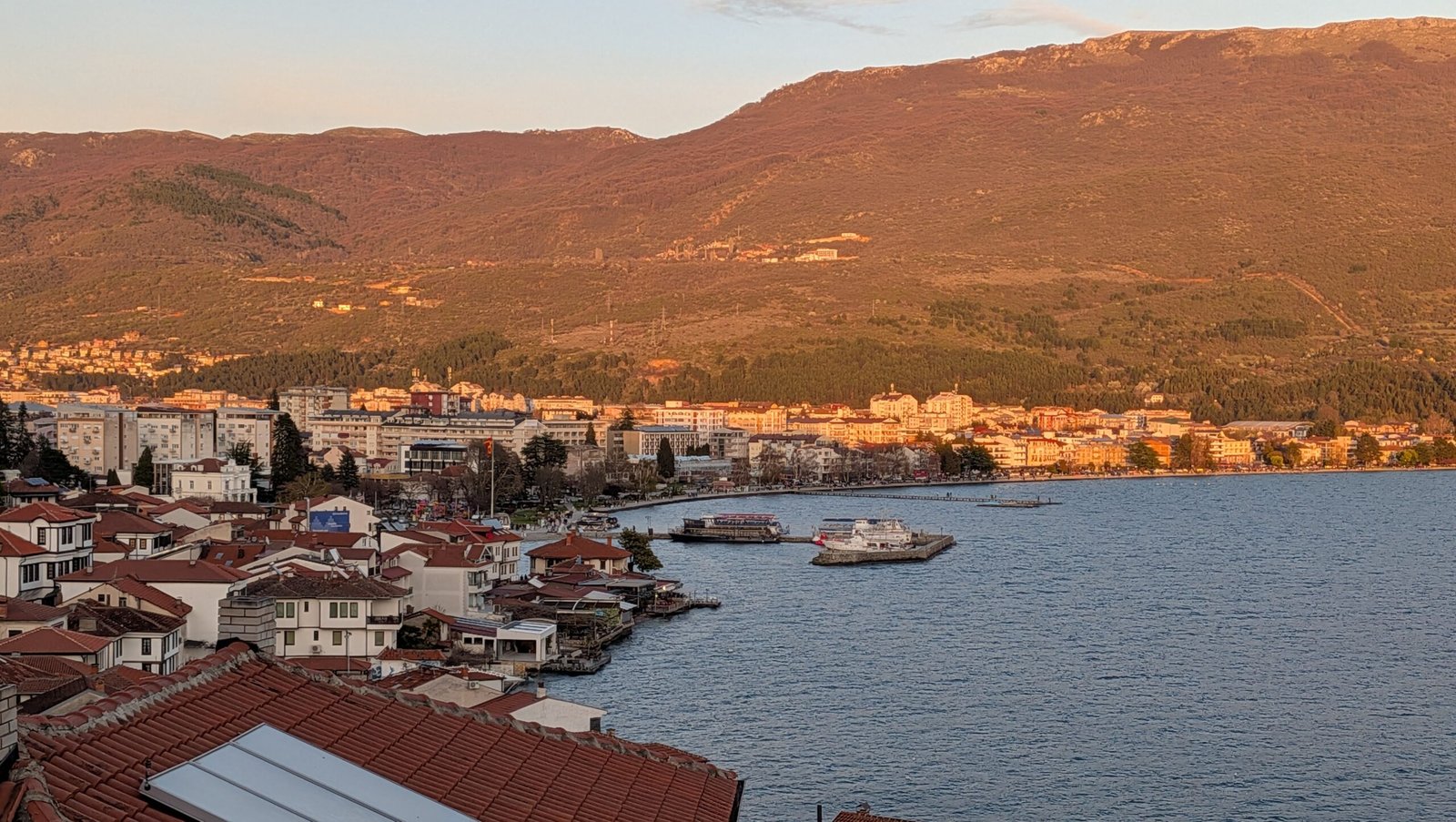
Lake Ohrid itself is the real draw—a vast blue expanse shared between Albania and North Macedonia, estimated at over a million years old, one of the oldest and deepest lakes in Europe, snow still clinging to the peaks above it. It was the off-season, quiet, the town clearly waiting for summer. Pizza and a beer ran about eight dollars. My last night in Albania, and I crossed into North Macedonia the next day.
Ohrid: Old Stones, Older Faith
Ohrid had been the destination since I first sketched out this trip, and arriving in time for Orthodox Easter made it feel less like a stop and more like a homecoming.
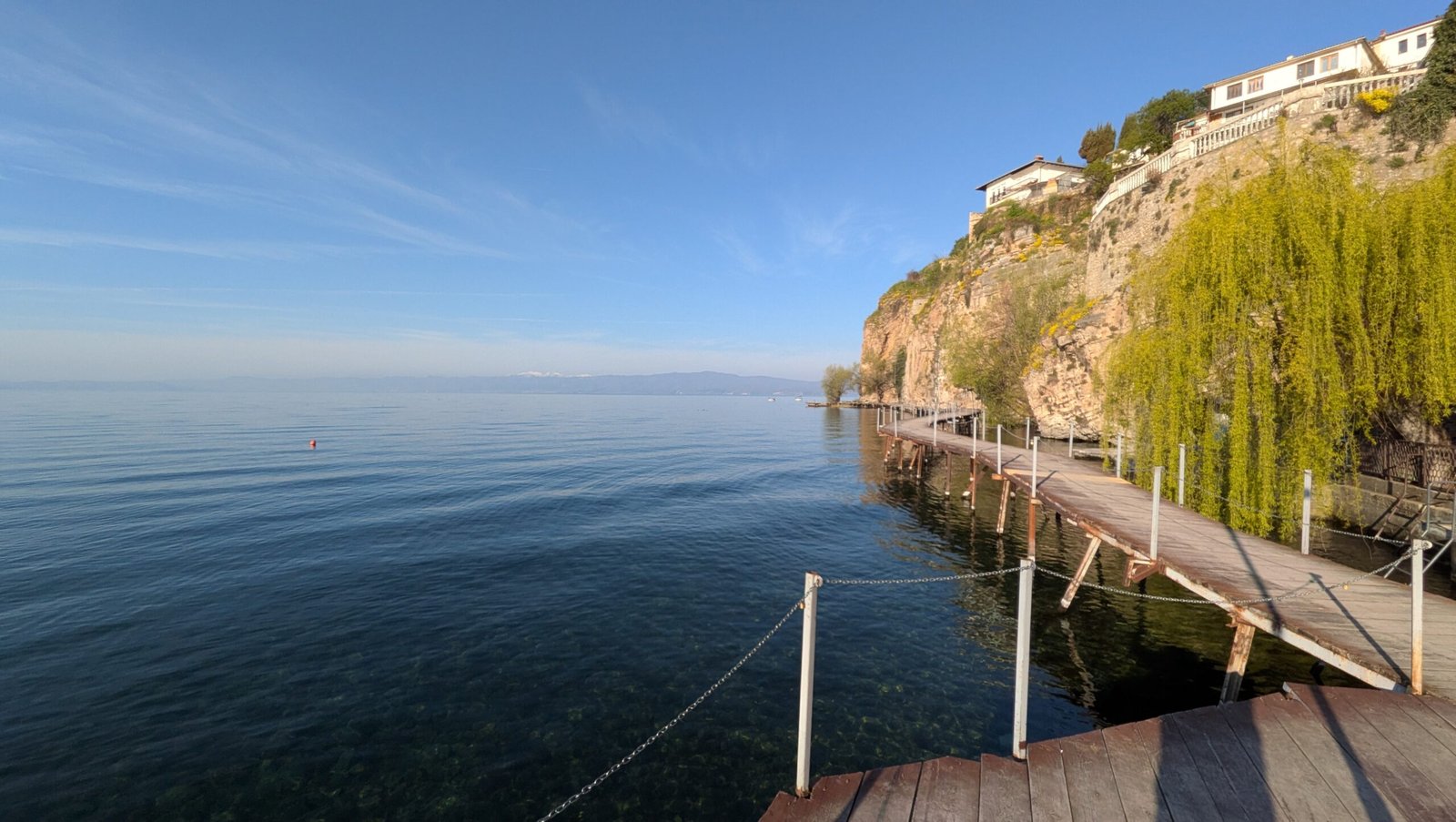
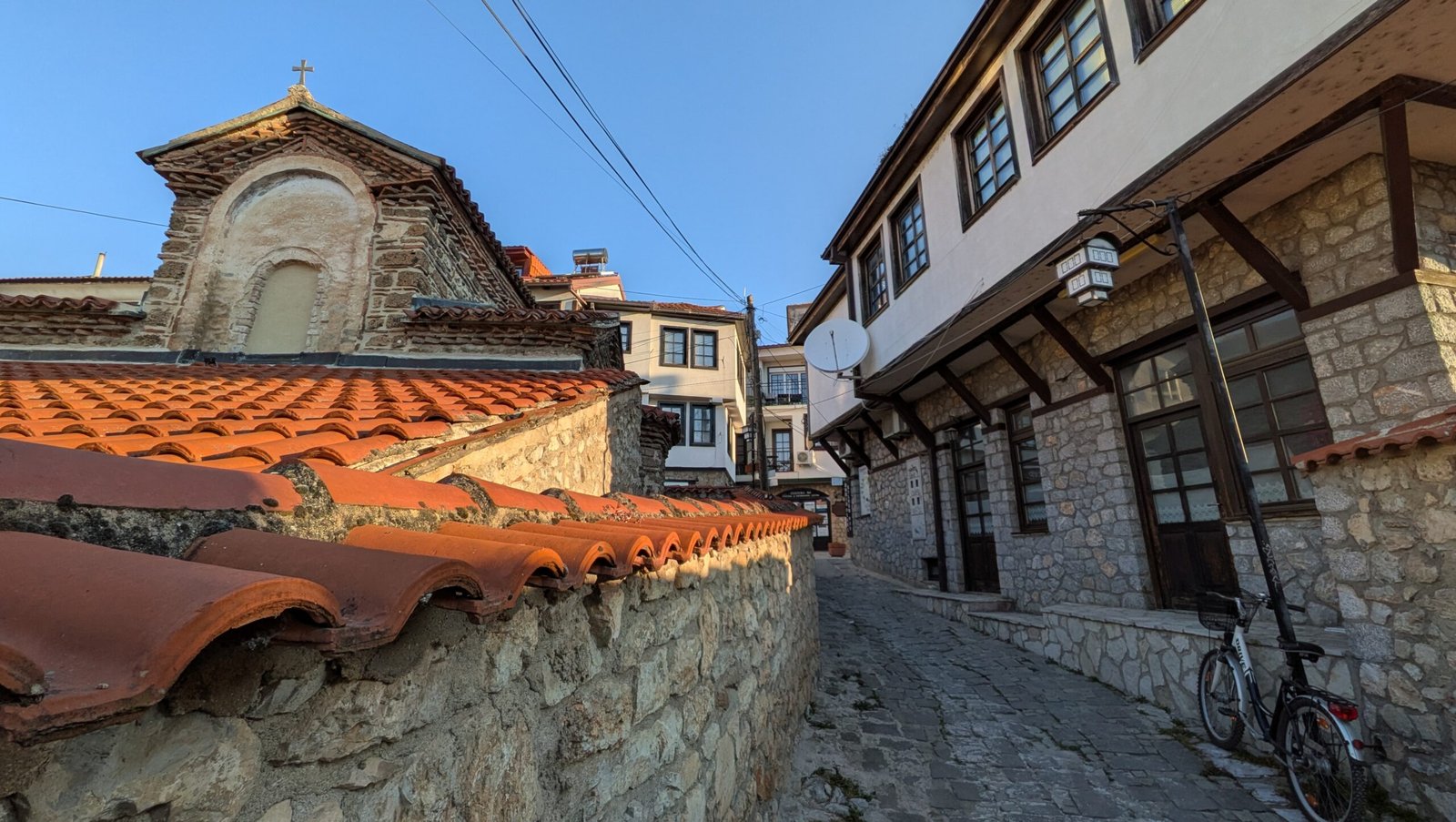
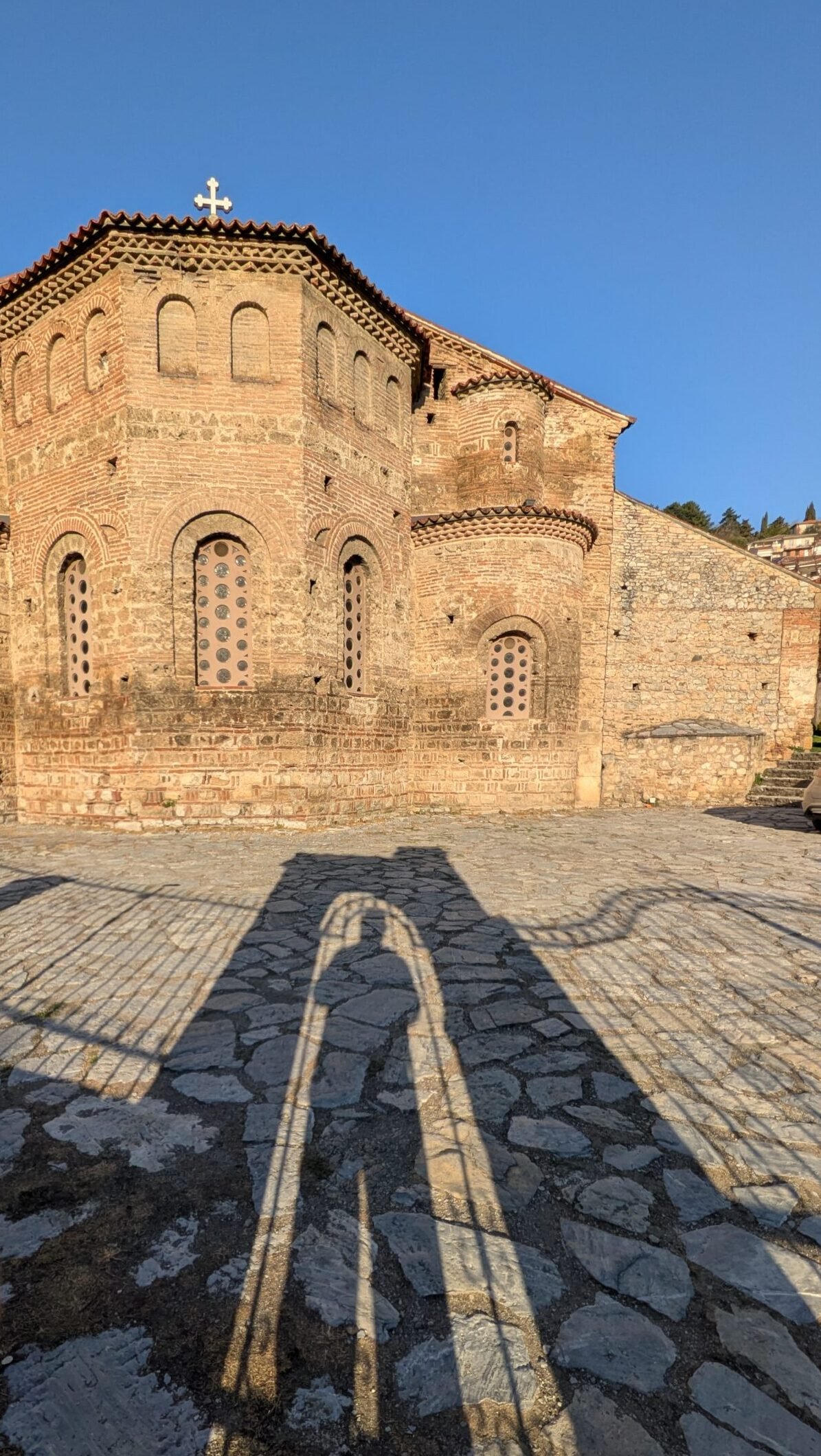
Legend has it the town once held 365 churches, one for every day of the year. My first evening there turned into a four-mile wander through the Old Town — stairs and inclines the entire way — that ended at the Church of St. John at Kaneo, perched dramatically above the lake and dating to the 13th century. I caught sunset out there, the light dropping over the water, and stopped moving for a while.
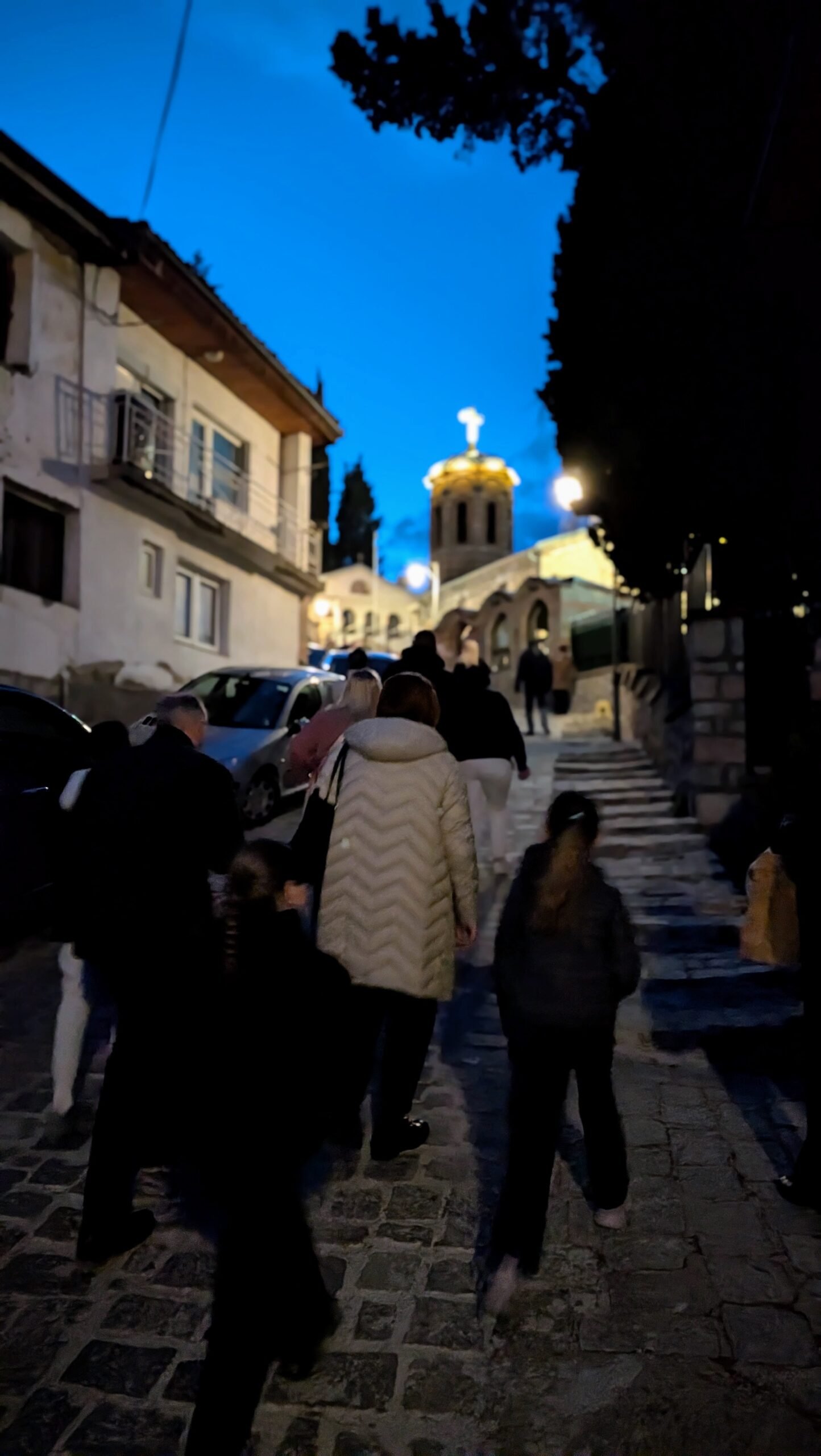
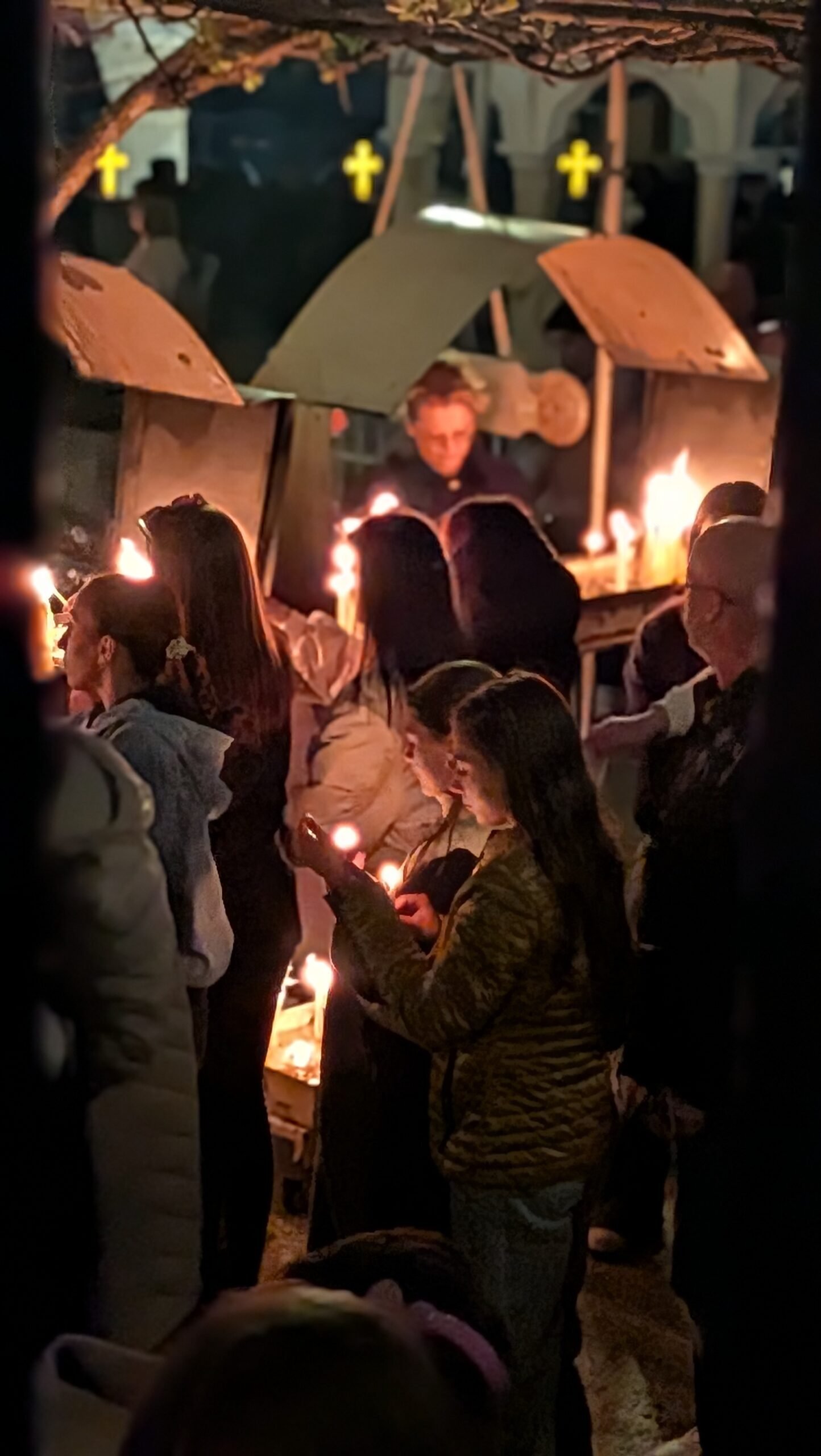
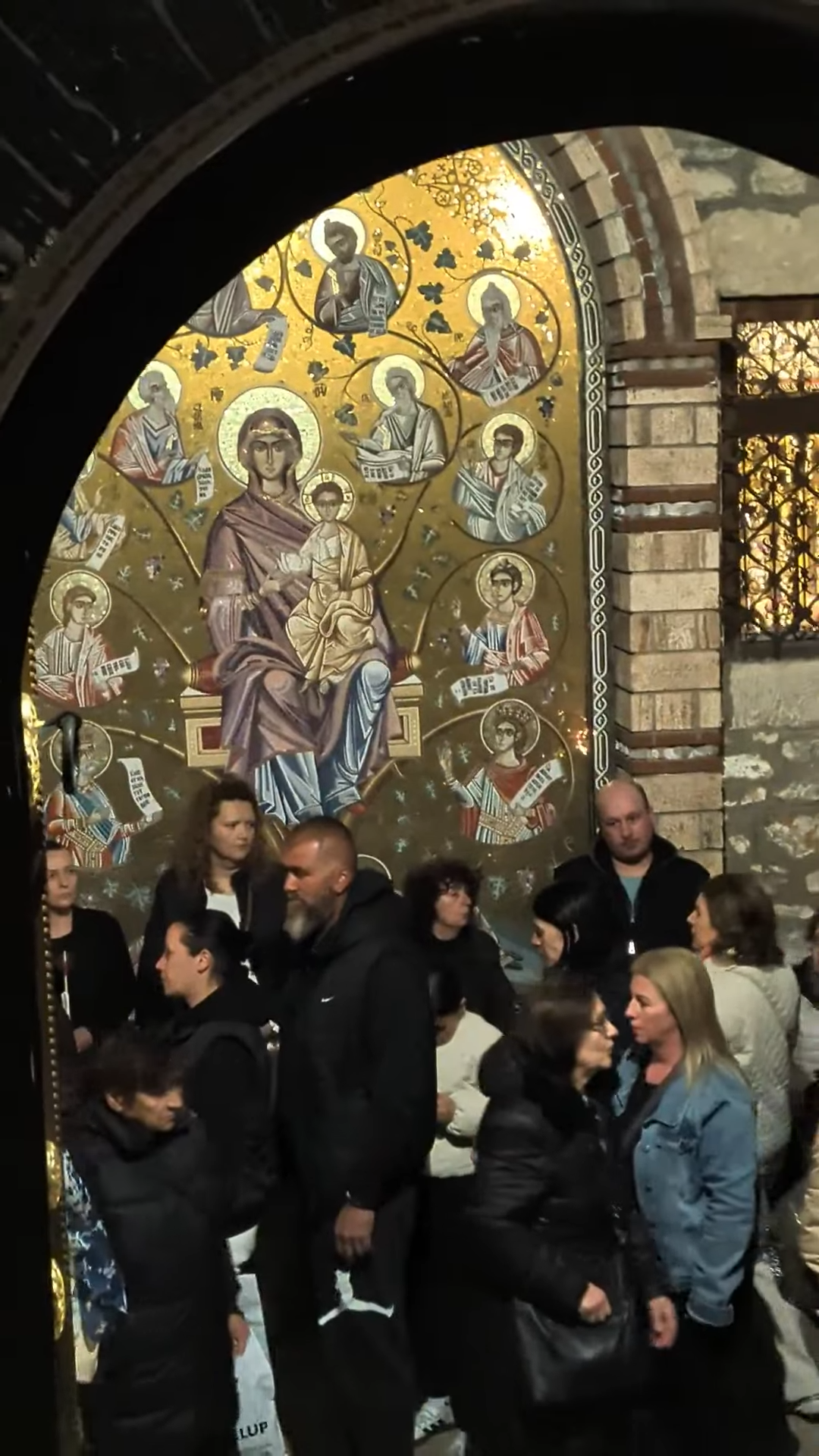
Working back through town afterward, through the narrow cobblestone streets of Old Town, I got pulled — almost physically — by the sound of chanting toward the Church of Holy Mother of God Kamensko, where Good Friday was being observed. Candles, low steady voices, the sound carrying out into the street. I stood outside the walls and just took it in, respectfully, no need to intrude. Something about that place — the weight of the history, the setting on the lake, the rhythm of Orthodox tradition — felt different from anywhere else on this trip.
I gave myself three nights there, and after a week of moving daily, that felt like real luxury. One full day I did essentially nothing — laundry, a nap, a slow walk along the promenade with a cocktail and a light meal at the end of it — and it was exactly the reset I needed.
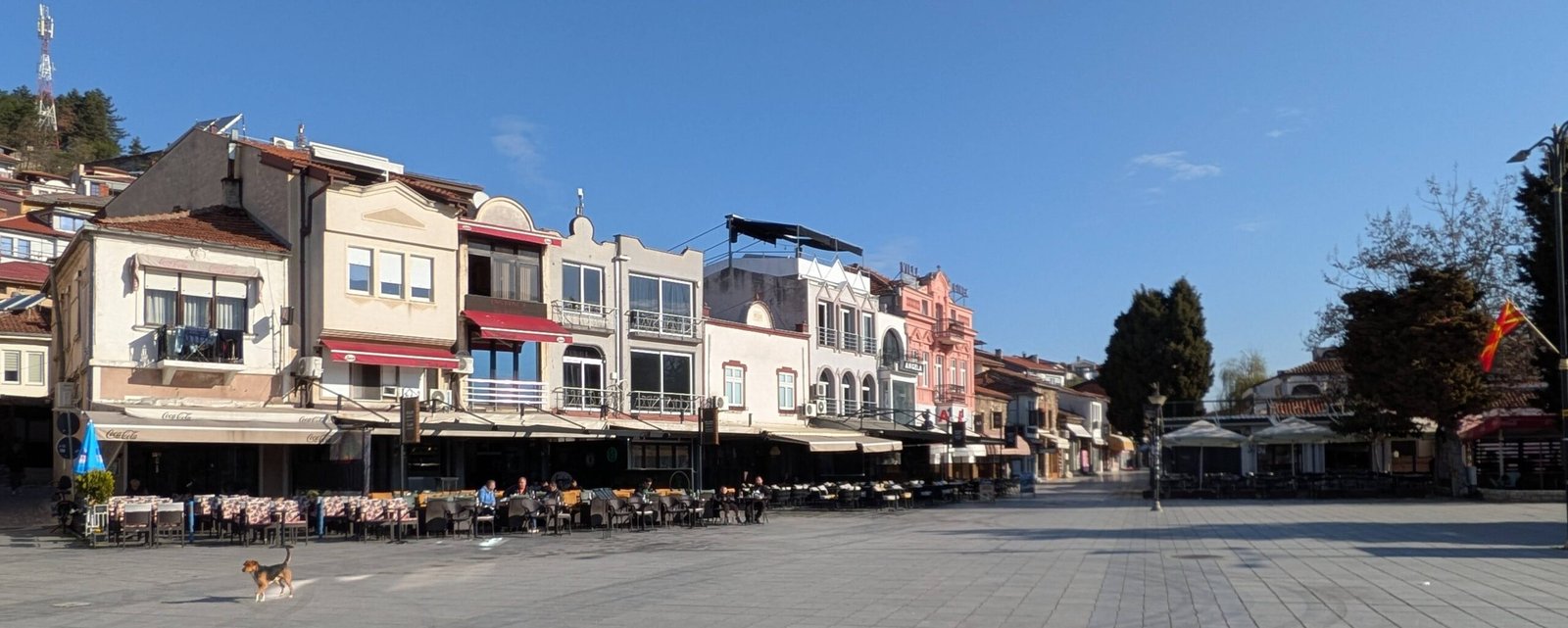
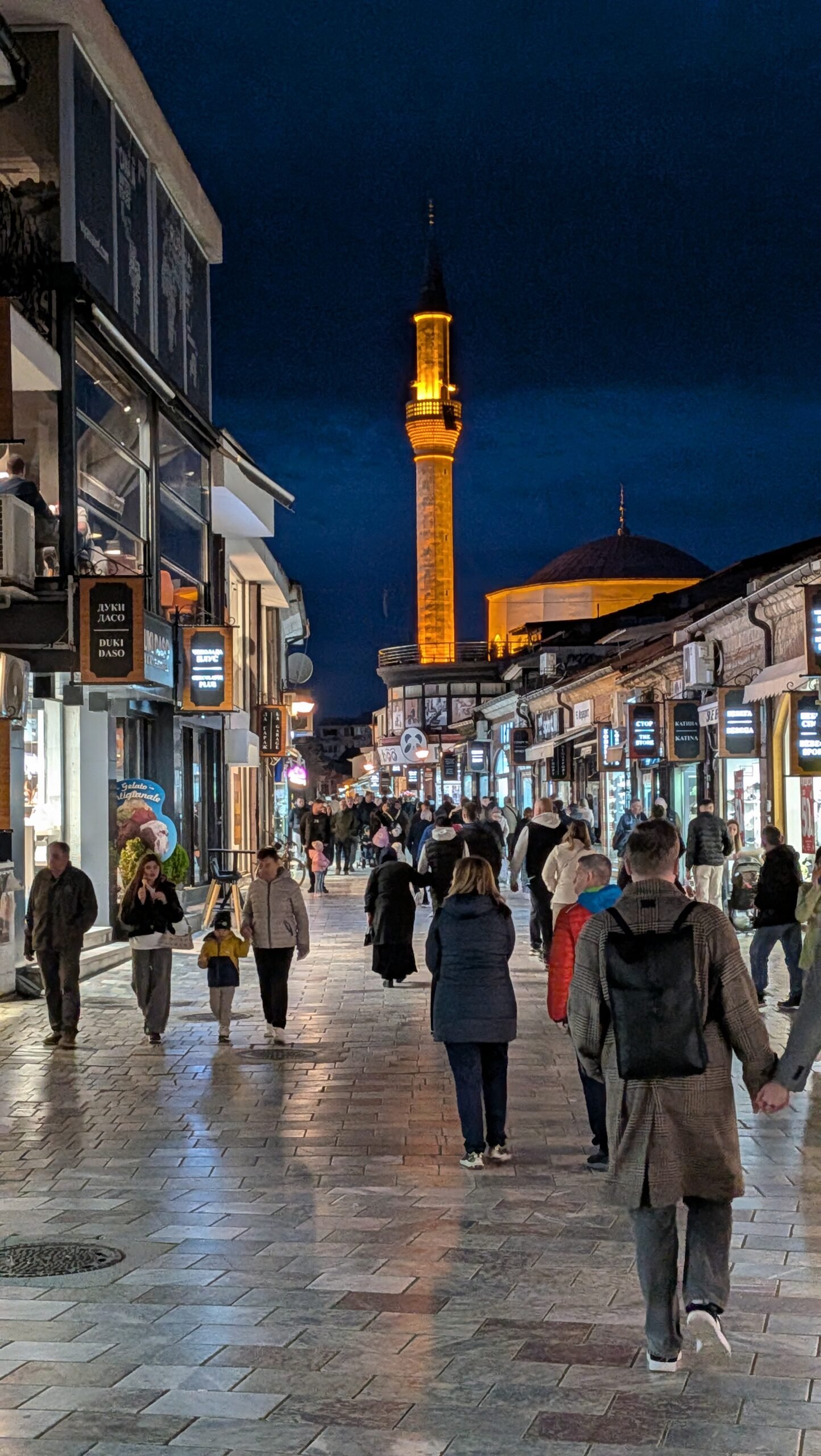
Easter morning itself was for chasing light through the Old Town with my phone, stone walls glowing under a low sun, followed by an evening of pork chops and Macedonian red wine with the lake stretched out in front of me and the mountains going soft with the fading light. The people here smile easily, laugh easily, and the town doesn’t feel overrun with tourists — mostly Macedonians and a scattering of foreign visitors, which only adds to how genuine the whole place feels.
By the time I packed up to leave, I understood why I’d built the whole trip around reaching this lake. Some places you visit for the history. Ohrid, you visit for the way it makes you slow down.
Easter in Ohrid
photos by Mike James