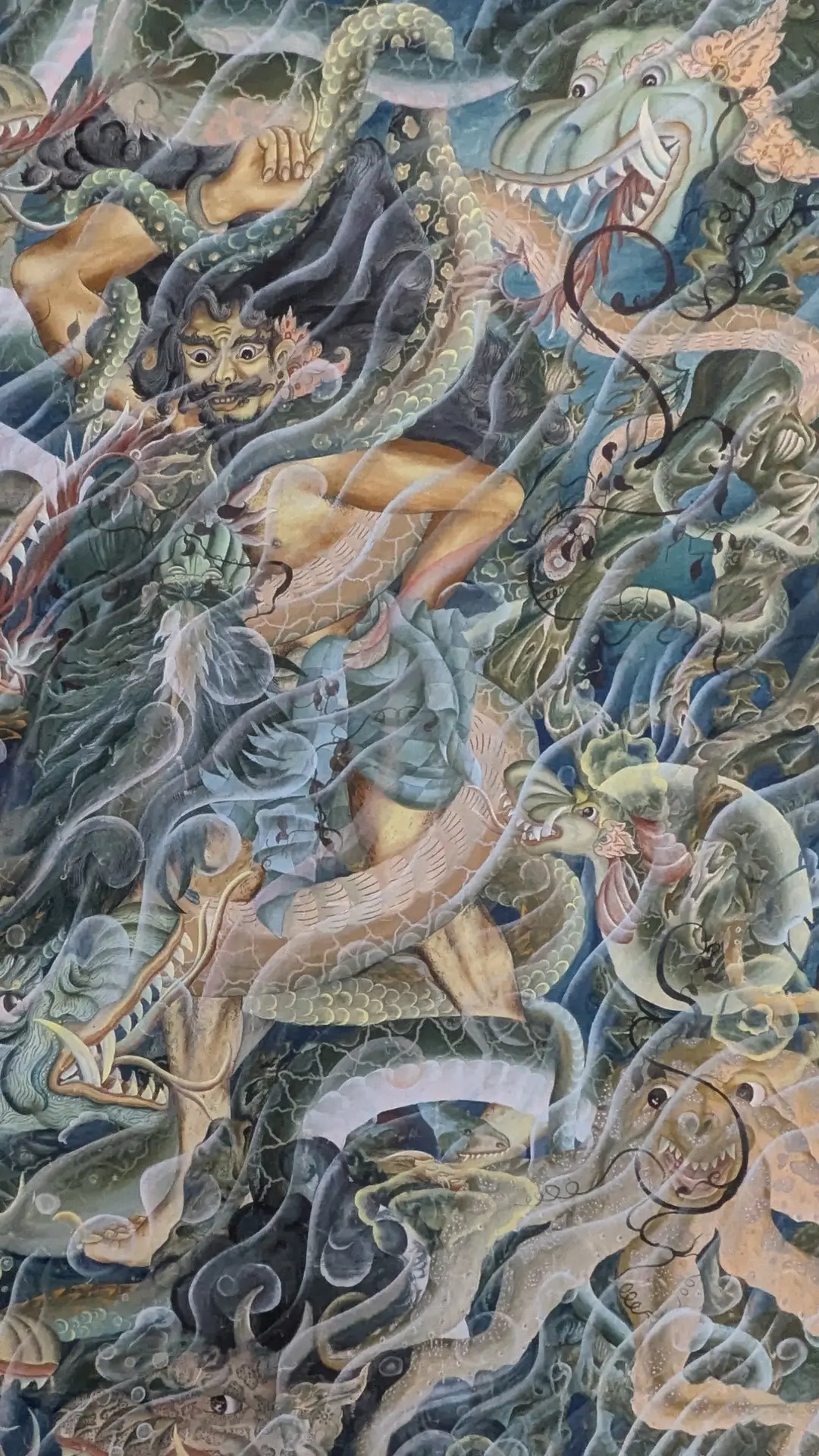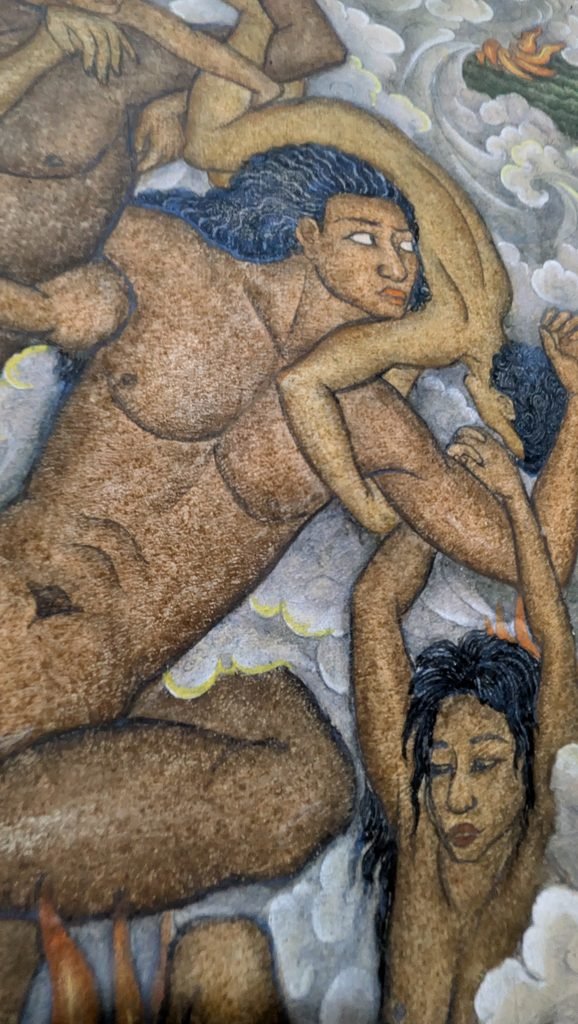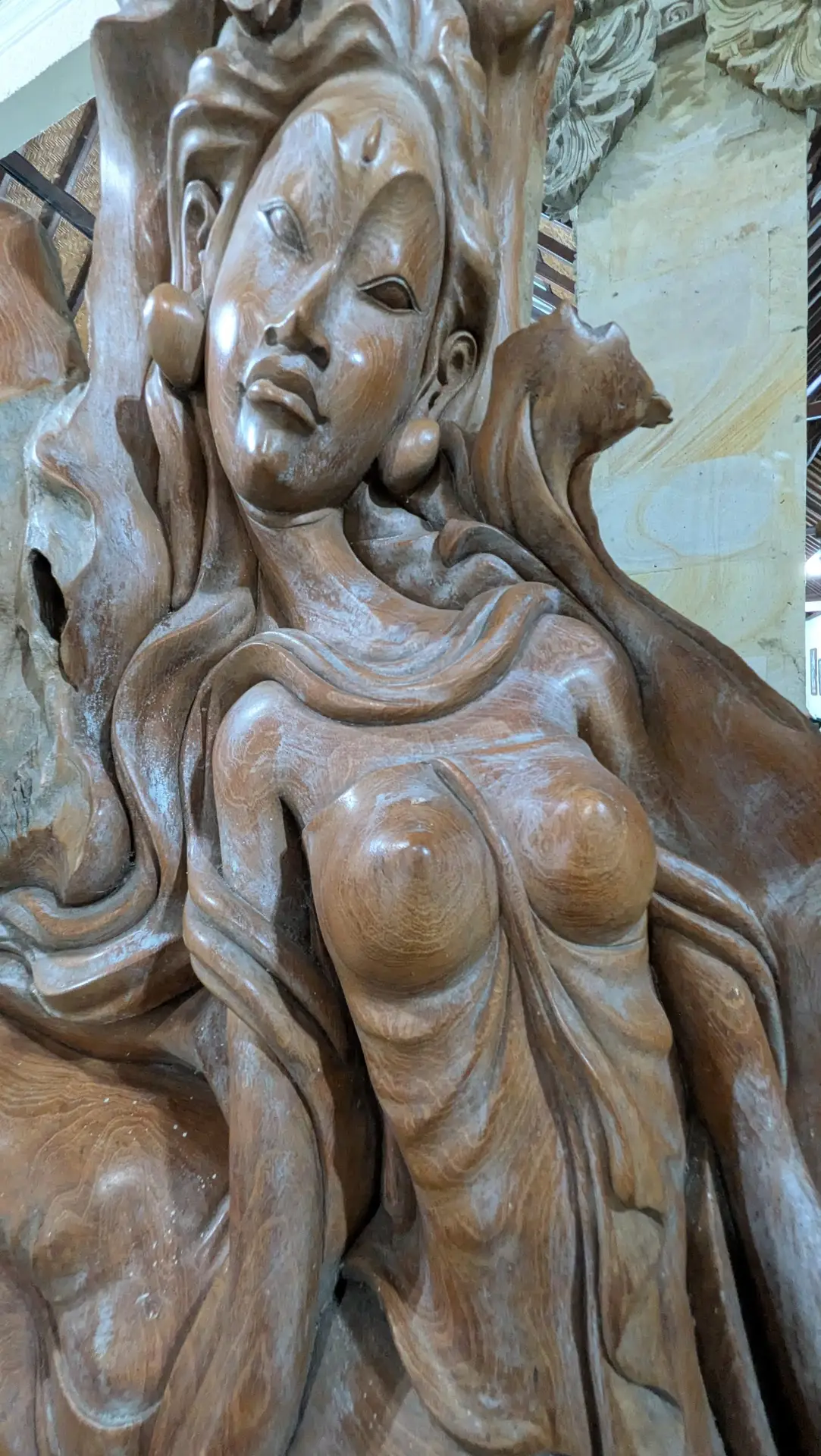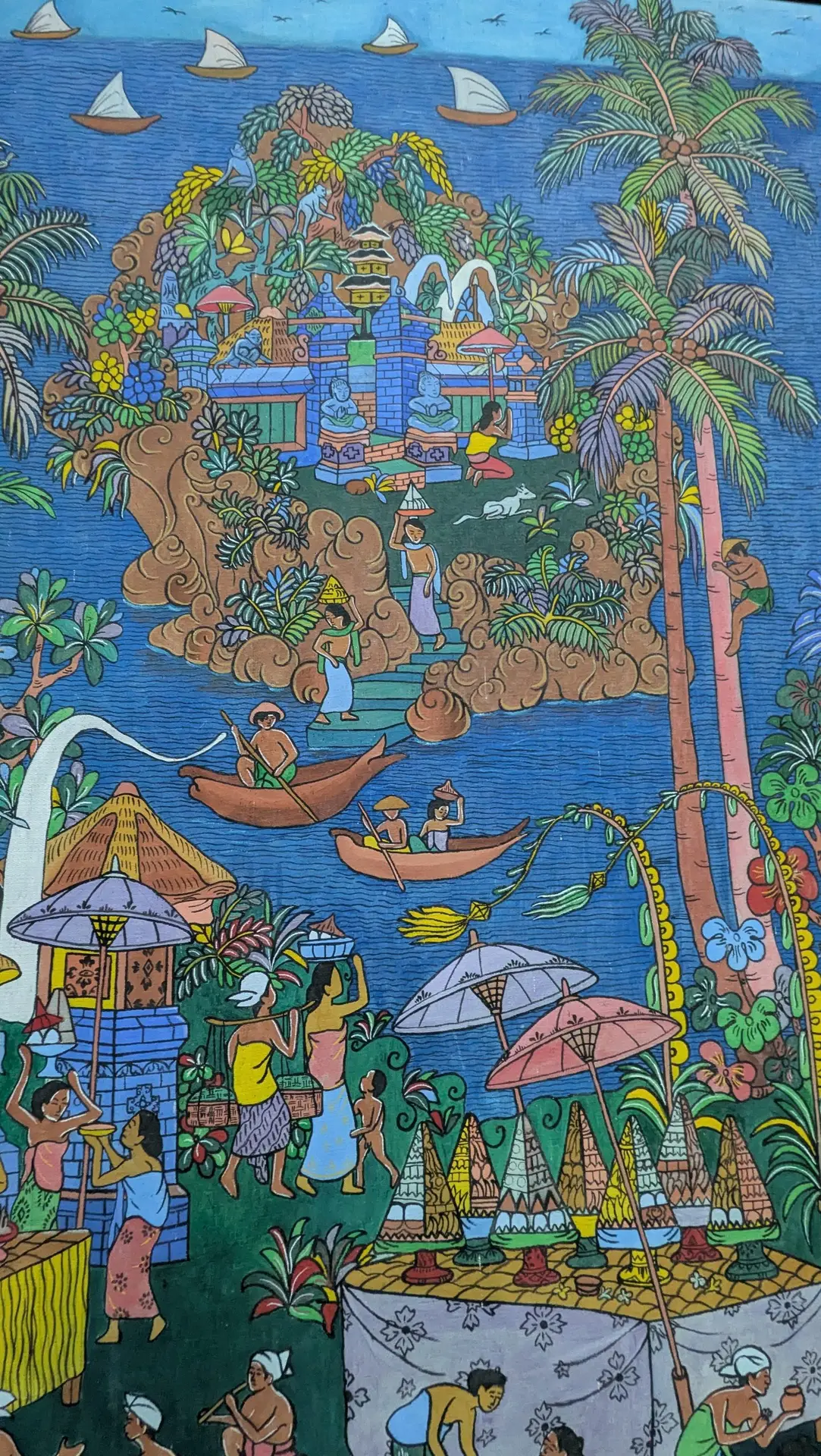
Yesterday I wrote about my visit to the Antonio Blanco Renaissance Museum and touched on what I called the creative vortex of Ubud, a place that has attracted artists from around the world for nearly a century.
Well, I’ve decided there’s a lot more to this story. In fact, it’s going to become a series.
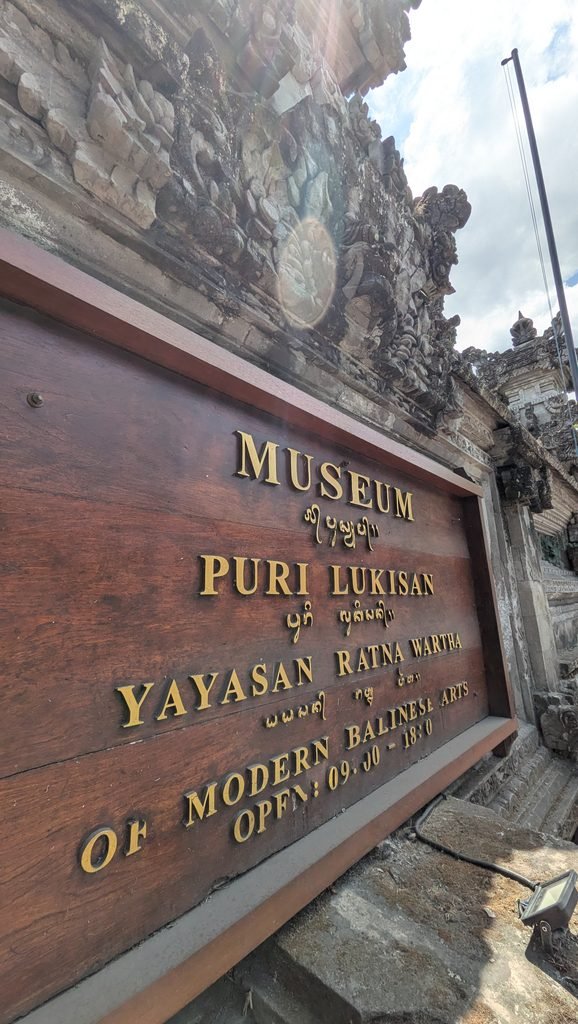
After reading yesterday’s post, my new friend Herman reminded me that there was another museum I really needed to visit: the Museum Puri Lukisan, dedicated to preserving the extraordinary artistic traditions of Bali.
So today I went.
And what I discovered was that the story of Ubud’s artistic community goes back much further than the European painters who arrived here in the 1920s and 1930s.
In fact, it goes back centuries.
When Art Was Sacred
Much of Bali’s traditional art developed around the Hindu religion, which gradually took root on the island through centuries of contact with neighboring Java and the wider Indian cultural world.
By the ninth and tenth centuries, Hinduism was firmly established in Bali. Its influence expanded considerably following the arrival of the Hindu-Javanese Majapahit kingdom in the 14th century.
Art became an essential part of religious life.
The great Hindu epics, the Ramayana and Mahabharata, provided generations of artists with an almost endless collection of gods, demons, heroes, battles and moral lessons.
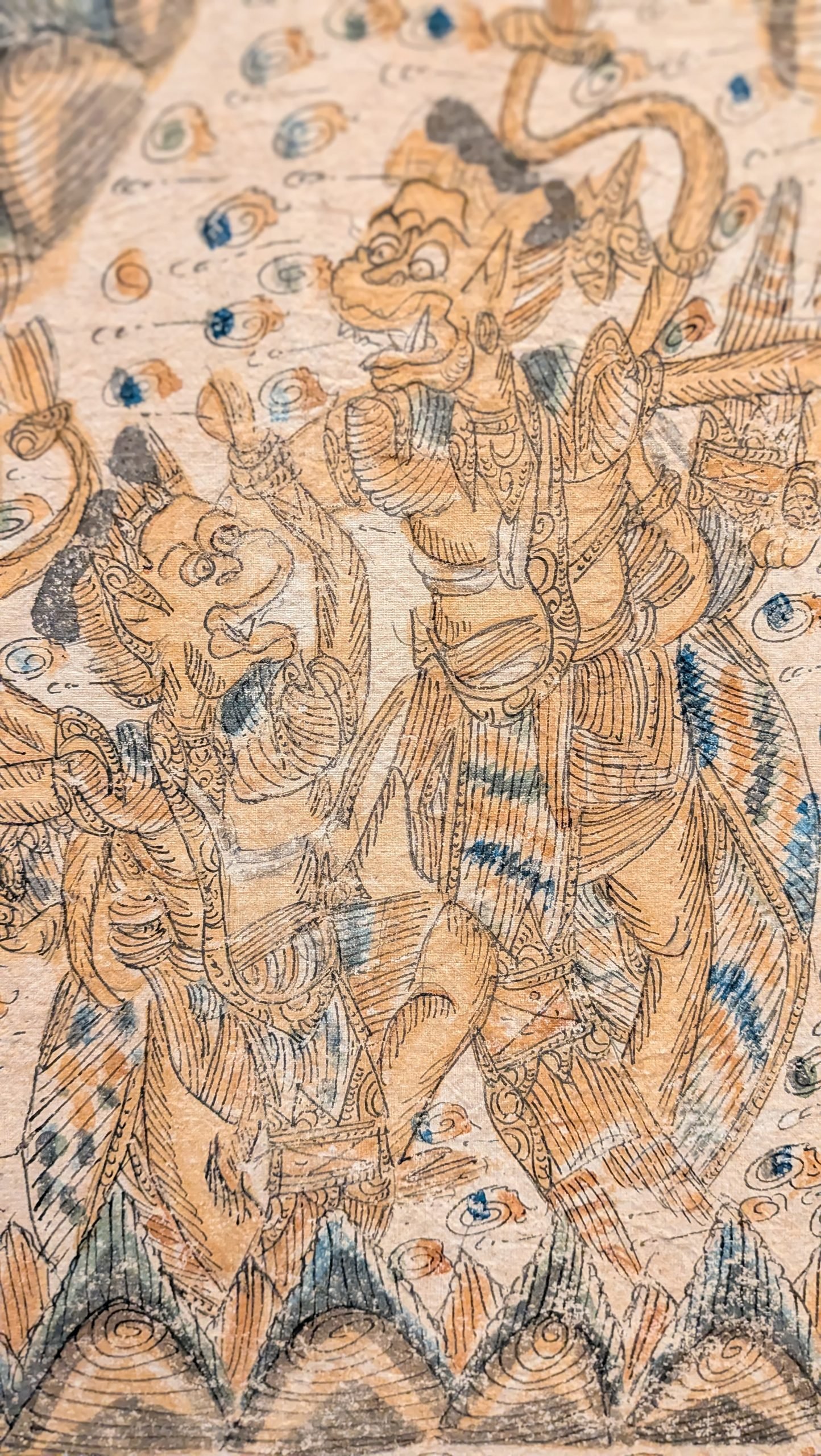
These stories weren’t simply written down and read. They were communicated through paintings, elaborate woodcarvings, temple decorations, dance and especially wayang kulit, the remarkable shadow-puppet theater that remains an important part of Balinese culture.
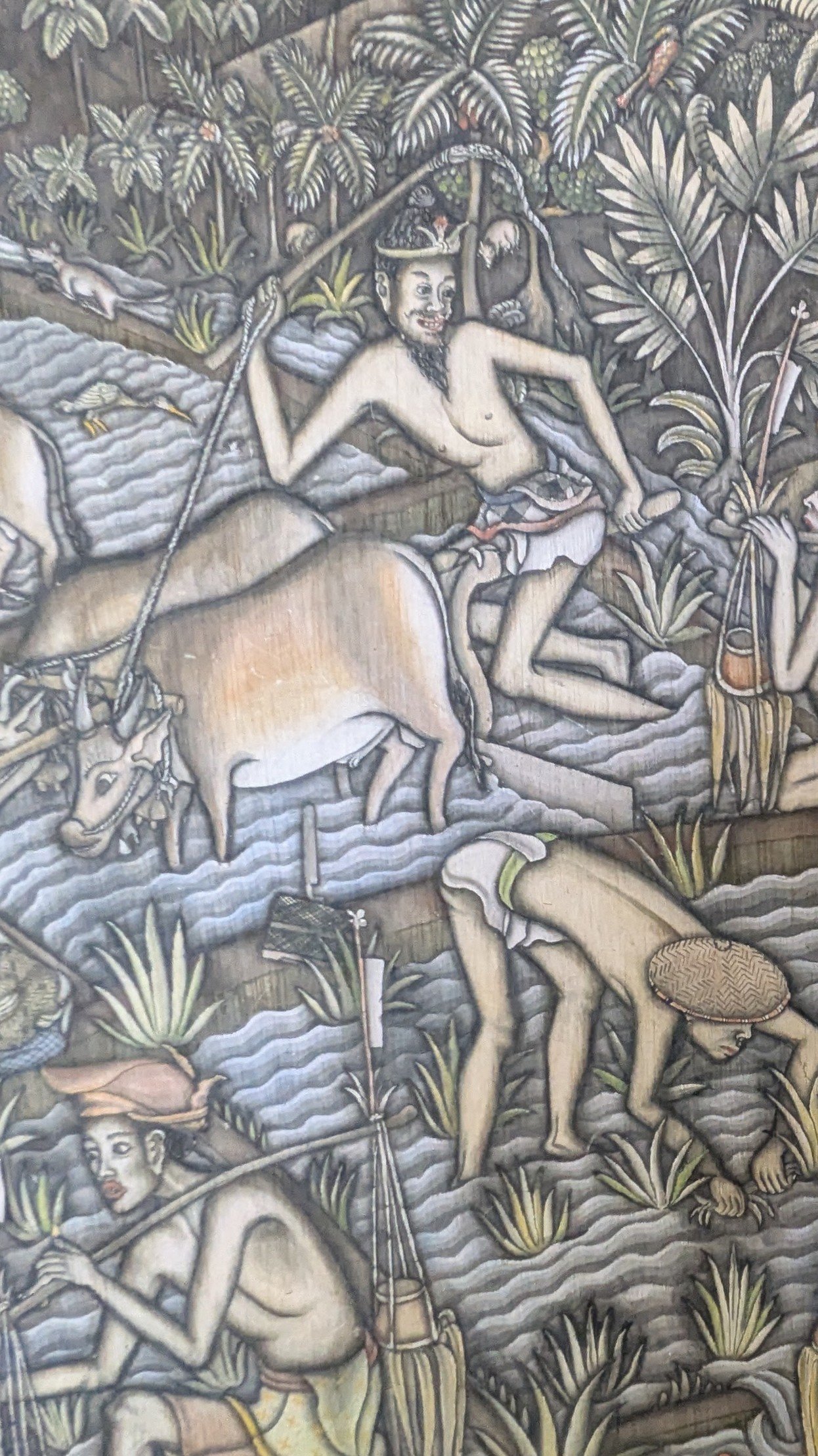
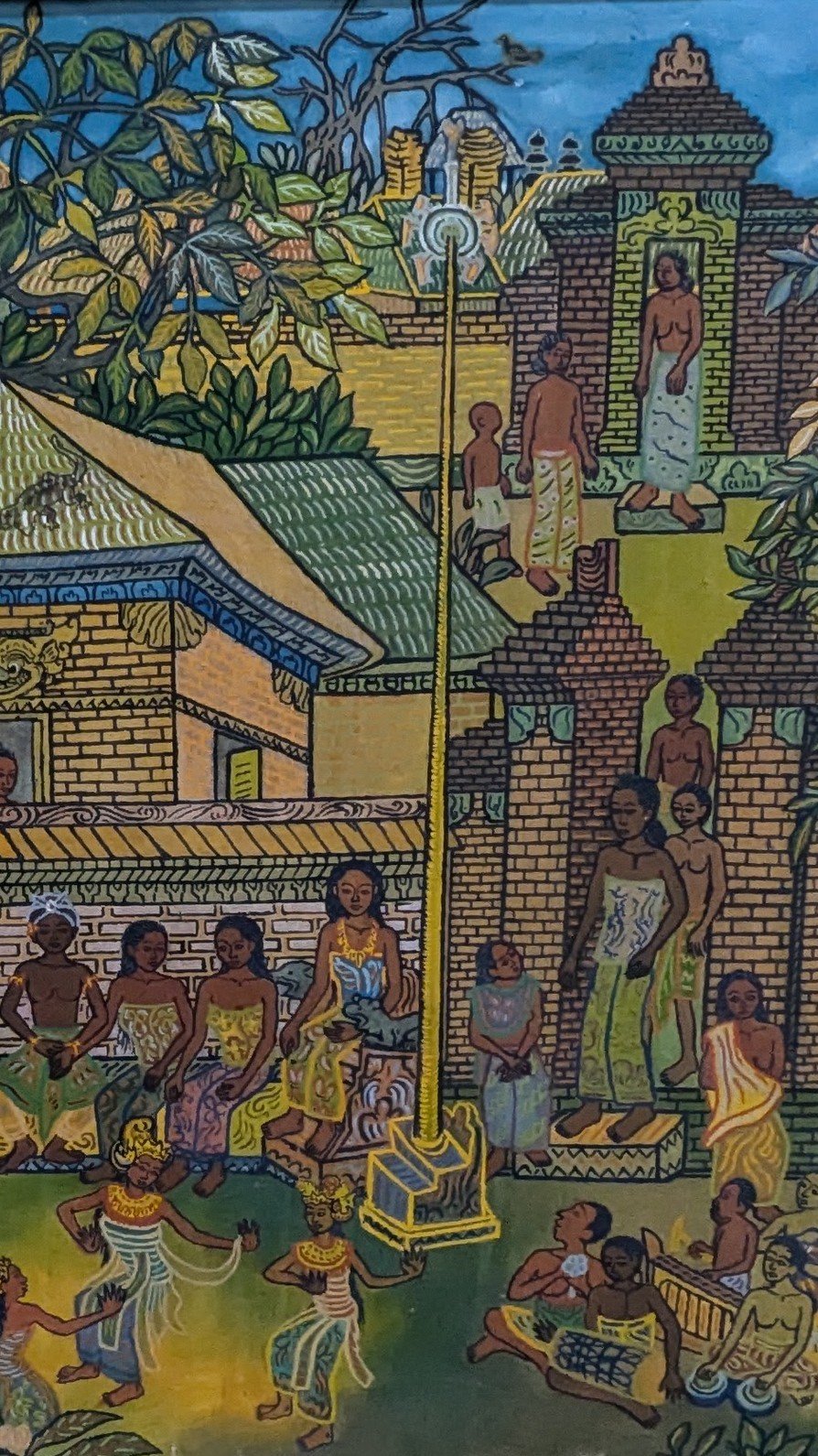
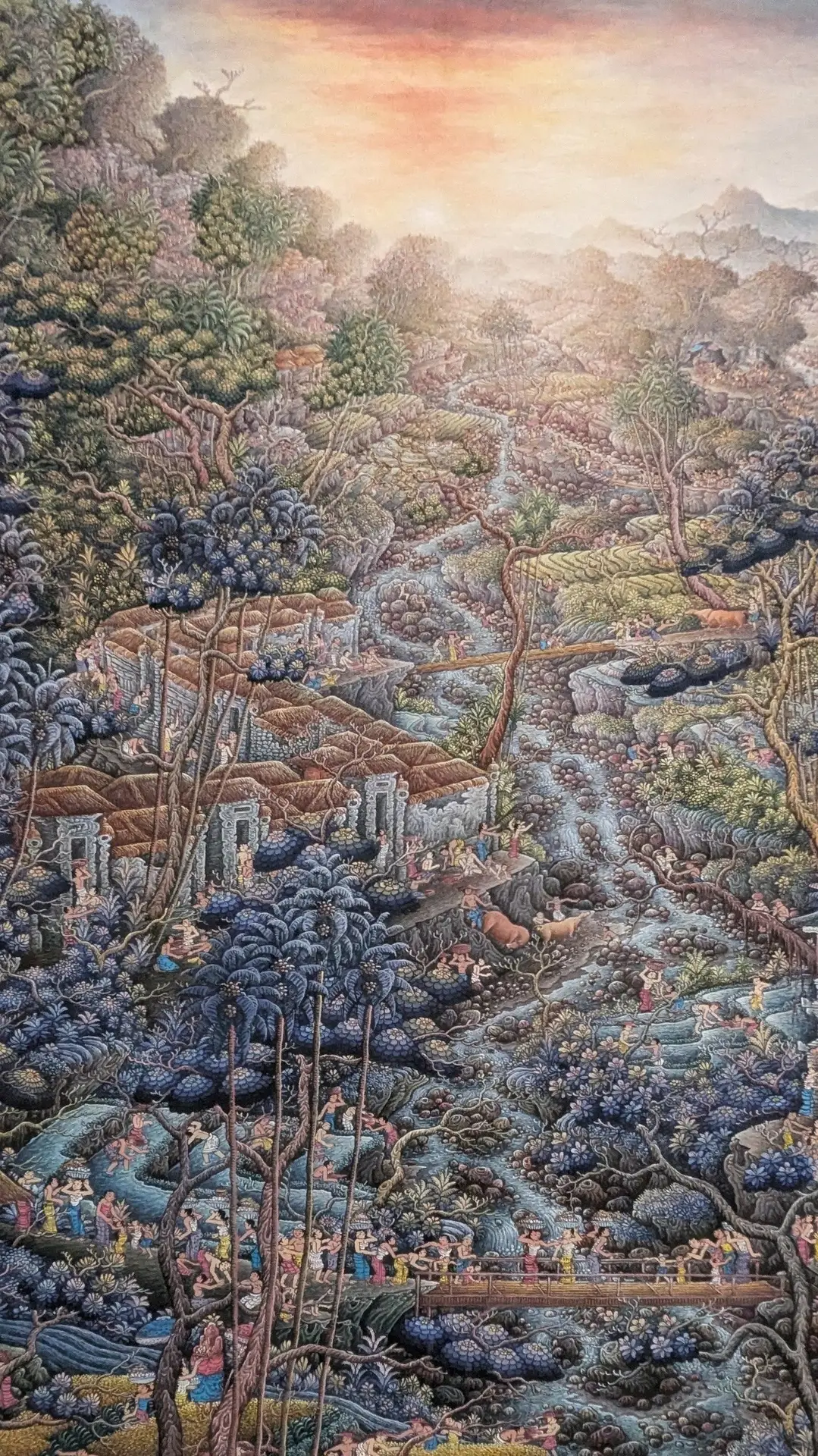
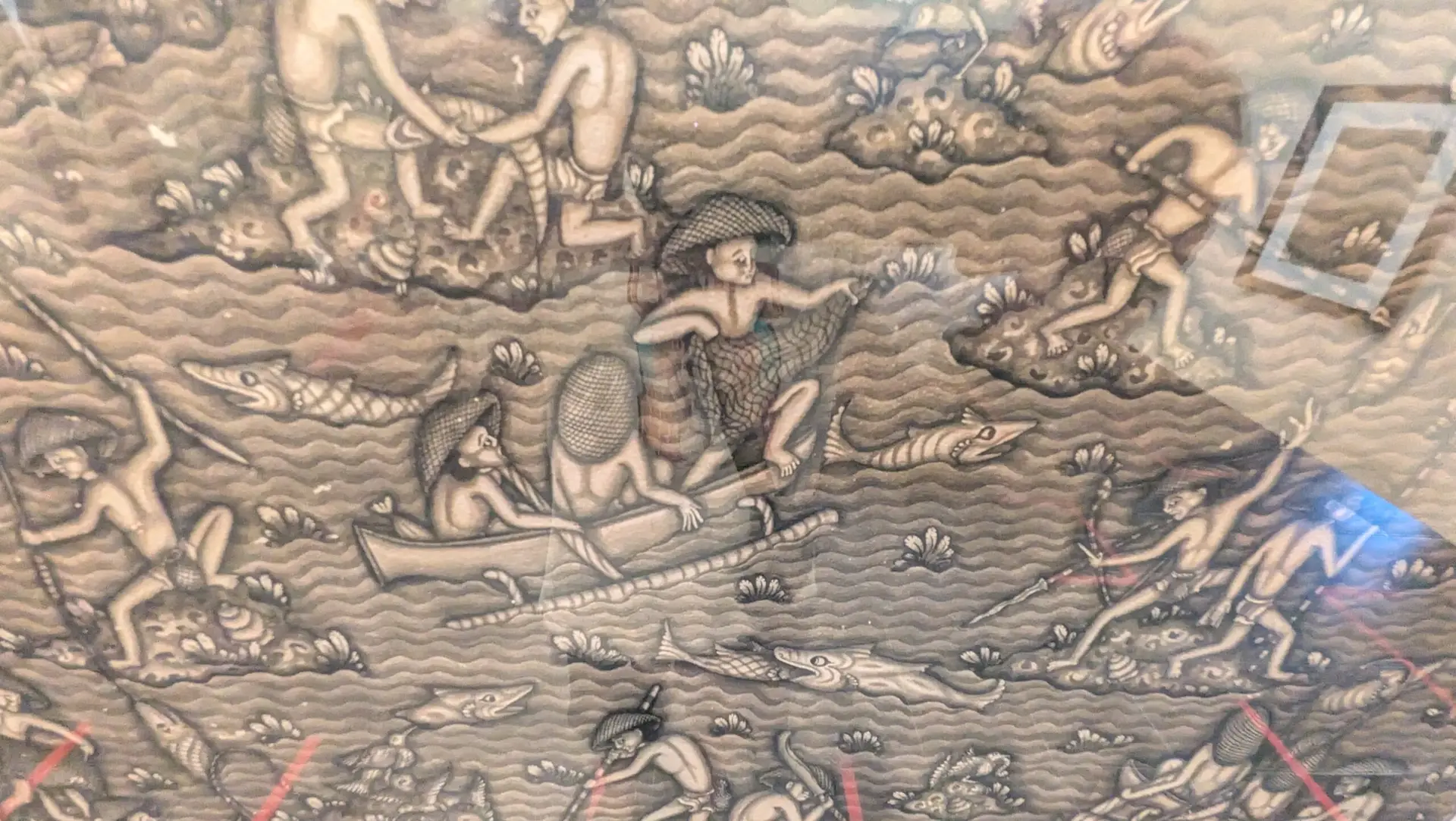
But religious mythology wasn’t the only subject. Artists also portrayed the everyday lives of Balinese people, their ceremonies, celebrations, agricultural activities and relationships with the natural world.
Over the centuries, different regions of Bali developed their own distinctive artistic traditions.
The classical Kamasan style, associated with the former kingdom of Klungkung, was especially influenced by Hindu mythology and the visual traditions of shadow puppetry.
Other traditions developed in Batuan, Ubud and Sanur, each with its own approach to composition, subject matter and artistic expression.
For generations, these artists worked within traditions passed down through families and communities.
Then, in the early 20th century, something remarkable happened.
The Europeans Arrive
In 1927, a German painter and musician named Walter Spies arrived in Bali.
Spies became deeply interested in Balinese culture, music, dance and especially its artistic traditions.
Rather than simply painting his own interpretations of Bali, he developed relationships with local artists and encouraged them to experiment with new subjects, techniques and ways of expressing themselves.
Another European painter, Rudolf Bonnet from the Netherlands, arrived in Bali in 1929 and became equally fascinated with the island’s artistic traditions.
Bonnet encouraged local painters to explore new approaches to human anatomy, composition and naturalism.
But these European artists weren’t introducing art to Bali. They were entering a society with centuries of extraordinary artistic achievement.
What developed was an exchange of ideas.
Balinese artists began experimenting with new techniques while maintaining their own cultural identities and artistic traditions.
The results were extraordinary.
The King and the Artists
In 1936, Spies and Bonnet joined forces with members of Ubud’s royal family and prominent Balinese artists to establish an organization called Pita Maha.
Among its principal figures were Tjokorda Gde Agung Sukawati, his brother Tjokorda Gde Raka Sukawati, and the remarkable Balinese artist I Gusti Nyoman Lempad.
The organization brought together approximately 125 painters and woodcarvers.
Its purpose was to encourage artistic development, improve the quality of work, organize exhibitions and introduce Balinese art to a much wider audience.
And the royal family understood the importance of what was happening.
Supporting the artists helped preserve Balinese cultural traditions and strengthen Ubud’s identity. It also attracted visitors who wanted to experience the island’s remarkable paintings, sculptures, woodcarvings and other artistic traditions.
Ubud was becoming more than a traditional Balinese village.
It was becoming an international artistic destination.
And the creative vortex was gathering momentum.
Preserving an Artistic Legacy
The Second World War disrupted much of this extraordinary collaboration, but the artistic movement continued.
Following the war, Rudolf Bonnet and Balinese artists and royal patrons renewed efforts to preserve the island’s artistic heritage.
There was growing concern that some of Bali’s finest artwork was being sold overseas and disappearing from the island.
In 1953, the Ratna Wartha Foundation was established to continue the ideals of Pita Maha and create a permanent home for important Balinese artwork.
Three years later, in 1956, the Museum Puri Lukisan officially opened.
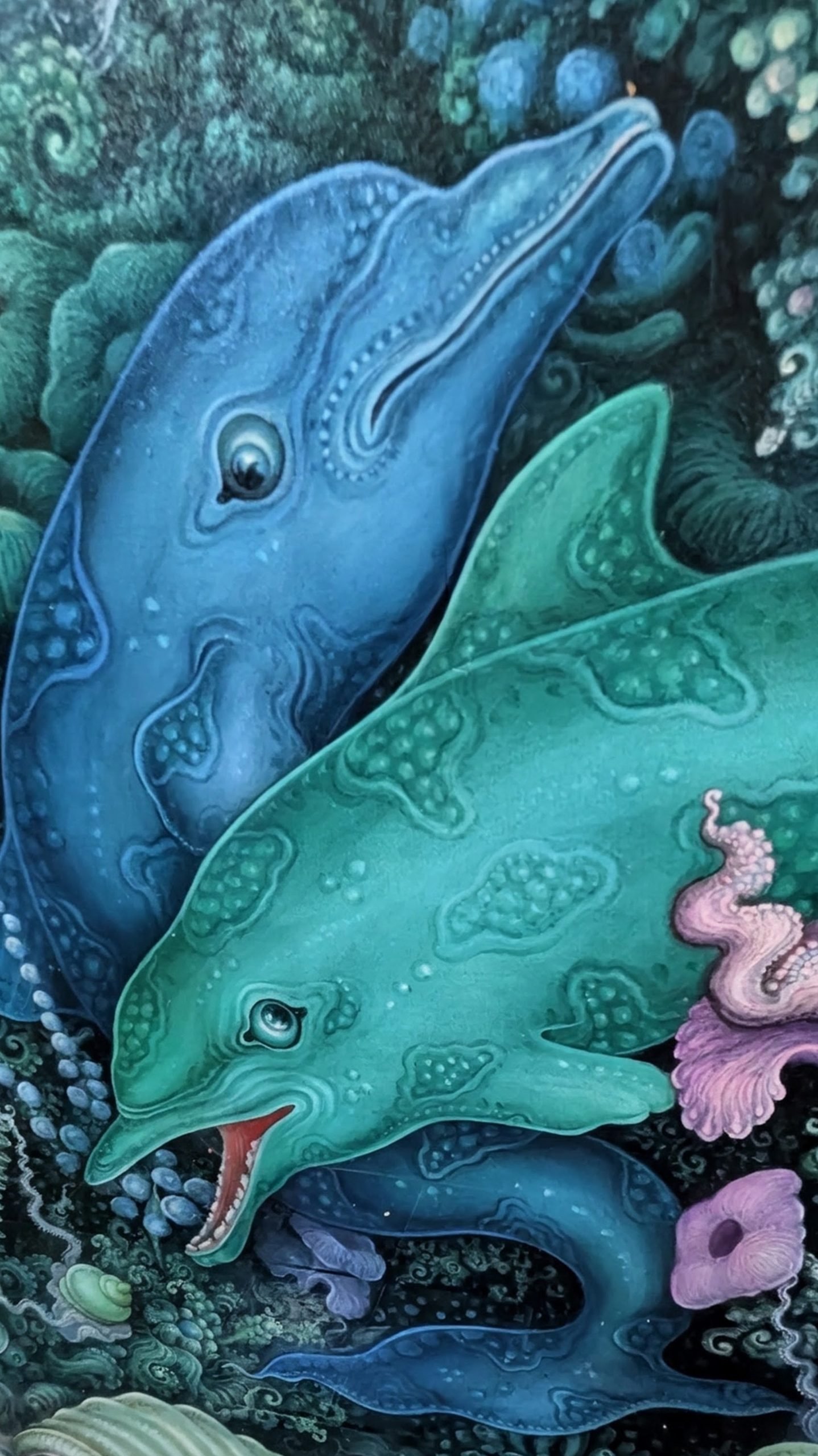
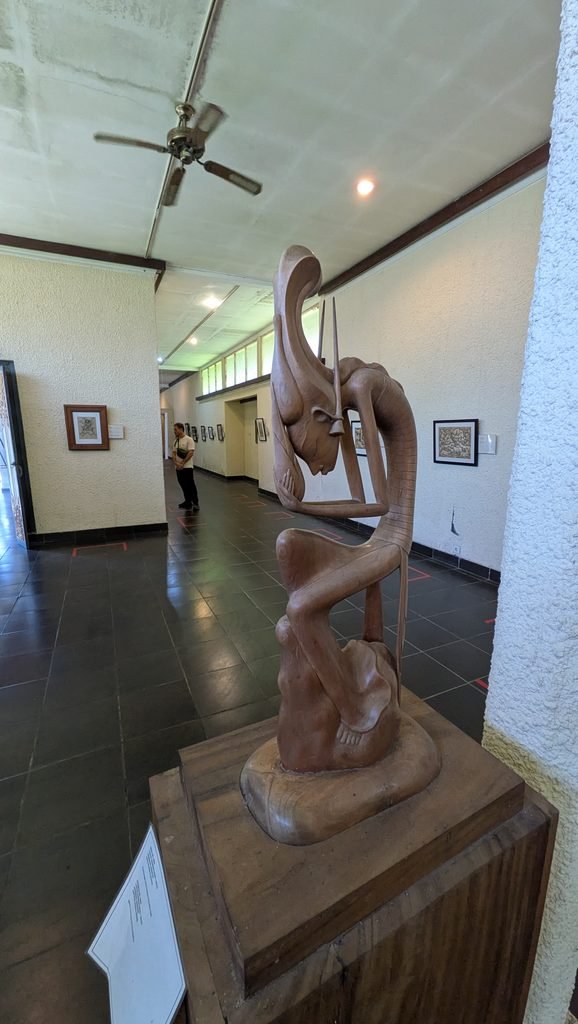
Today, its galleries contain an extraordinary collection of paintings, drawings and woodcarvings that trace the evolution of Balinese art from its traditional roots into the modern era.
Walking through the museum, you can see how different generations of artists experimented with new ideas while continuing to draw inspiration from the island’s religious traditions, landscapes and everyday life.
A New Generation of Artists
And the evolution didn’t stop there.
In the early 1960s, another Dutch artist, Arie Smit, encouraged young painters in the village of Penestanan, near Ubud, to experiment with painting.
The results became known as the Young Artist style.
These paintings are wonderfully colorful, sometimes almost childlike, filled with scenes of Balinese village life, animals, rice fields, temples and celebrations.
They represent another chapter in the continuing evolution of Balinese art.
And what fascinates me is that these artistic traditions are still alive.
Ubud isn’t simply a place where visitors come to see artwork created generations ago. It’s a community where artists continue to paint, carve, sculpt and experiment with new ideas.
The Creative Vortex Continues
Yesterday, at the Blanco Renaissance Museum, I explored the imagination of one eccentric Spanish-Filipino painter who found his paradise in Bali.
Today, at the Museum Puri Lukisan, I discovered something much larger.
A centuries-old artistic tradition that was transformed through collaboration between Balinese artists, European painters and a royal family that recognized the importance of preserving and promoting its cultural heritage.
It’s a fascinating story, and I’m beginning to understand why so many artists from around the world were drawn to this remarkable place.
And why so many never left.
I’m also beginning to realize that I’ve only scratched the surface of the creative vortex that is Ubud.
There will definitely be a Part Three.