Sunday morning, I finally got my butt out of the beach lounge chair and headed off to explore the real Bali.
My driver, Yudi, and my tour guide and new friend, Runa, joined me on a mission I’d been planning for months: finding the elusive Gebug Seraya Festival, where Balinese men beat the hell out of each other with rattan sticks.
Well, there’s a little more to it than that.
The traditional stick fighting, known as Gebug Ende, is actually a centuries-old ritual associated with prayers for rain. The fighters use long rattan sticks and small shields, and apparently they don’t hold back.
I’d been researching this festival for months, trying to pinpoint exactly when it would take place. The internet was full of conflicting dates, but October 11 looked promising.
So off we went.
We headed out of Sanur along Bali’s crowded highways, following the coast toward the northeastern part of the island. Eventually, we turned inland and began climbing into the foothills.
The roads got narrower and narrower, eventually becoming winding, single-lane stretches through small villages, thick vegetation, and beautiful countryside.
We knew it would take two and a half to three hours to get there.
Fortunately, we had plenty of entertainment.
Runa taught me some new Indonesian words, and at one point we broke into karaoke, singing into microphones in the car as Yudi navigated the mountain roads.
Nothing like a little karaoke to pass the time while searching for men beating each other with sticks.
Finally, after nearly three hours, we arrived at the supposed festival location.
Closed.
Not a fighter in sight.
We stopped nearby and talked to a young man who knew all about the festival. In fact, he was one of the stick fighters.
He told us the fighting wouldn’t take place until November.
November!
After months of research and a three-hour drive, we’d managed to find the right place on the wrong day.
And even now, I can’t find anything reliable online about when the festival actually takes place.
Strike one.
But I wasn’t disappointed for long. The scenery had been beautiful, the company was great, and we’d already had a wonderful time getting there.
Besides, we were in eastern Bali, far from the tourist crowds, and there was plenty more to explore.
A Royal Water Palace
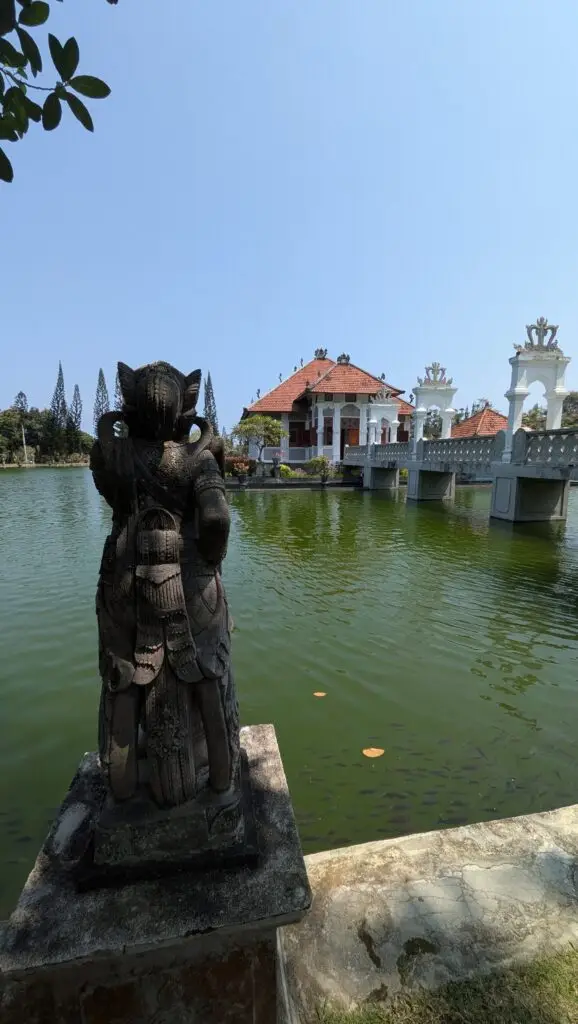
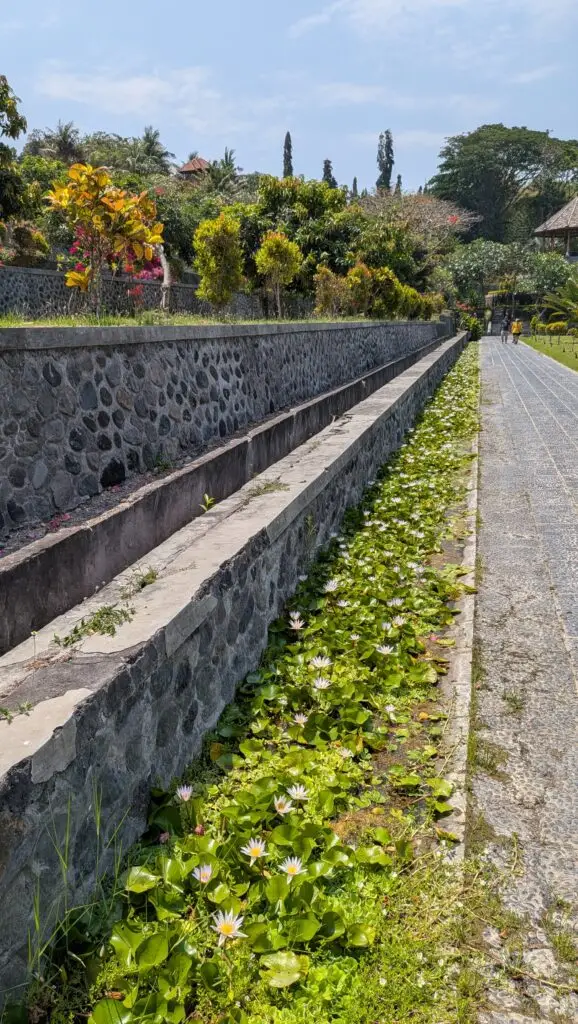
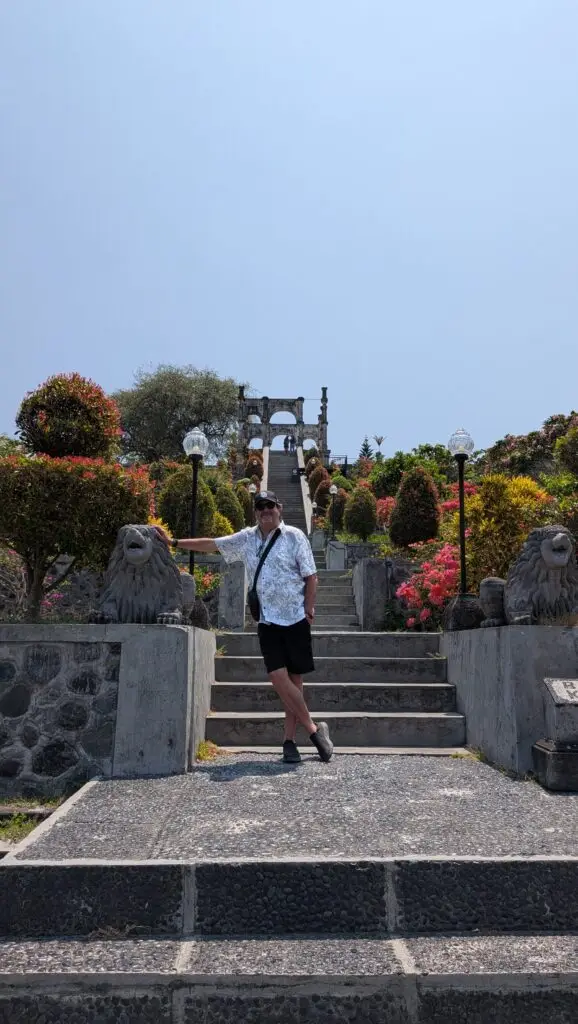
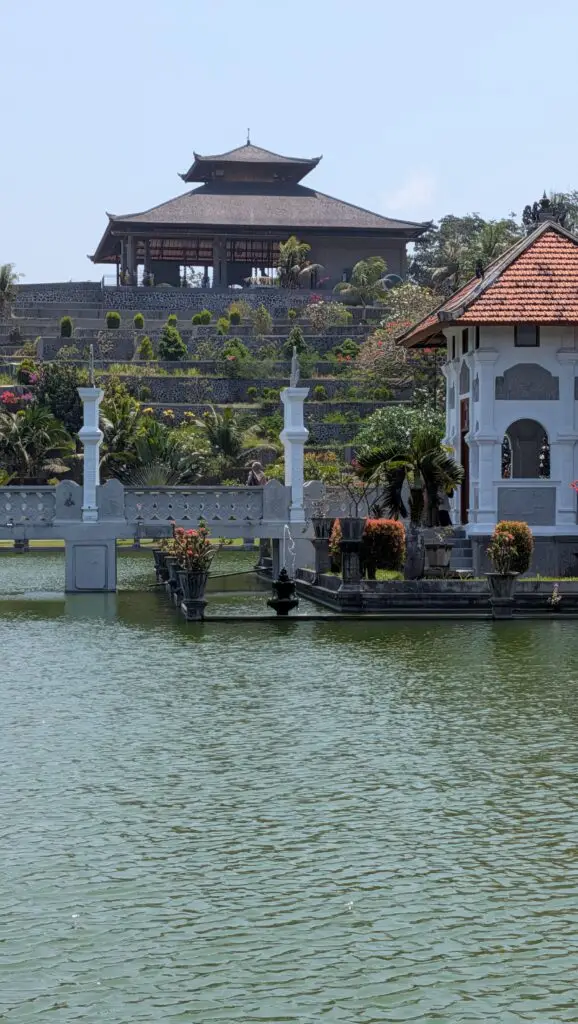
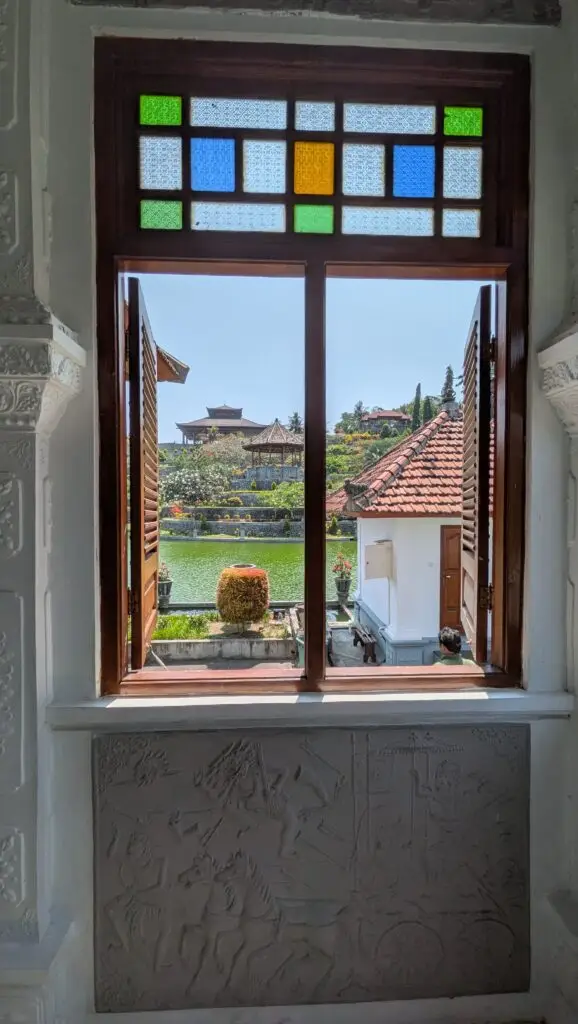
Our next stop was Taman Ujung Water Palace, once a royal retreat belonging to the kings of Karangasem.
Built in the early 1900s and completed in 1921, the palace is a beautiful collection of ornamental pools, bridges, pavilions, and gardens. The architecture is an interesting mixture of Balinese, European, and Chinese styles.
It was built by the King of Karangasem as a place to entertain guests and visiting dignitaries.
The grounds are spectacular, with enormous reflecting pools surrounded by mountains and lush gardens.
We wandered around, took photographs, and fed some very large fish.
What fascinated me most was learning about the Kingdom of Karangasem and how Bali was once divided into separate kingdoms, many isolated from one another by mountains, jungle, and difficult terrain.
It’s something you don’t think much about when you’re sitting on the beach drinking a Bintang.
And it was becoming one of the most interesting parts of our journey.
Lunch at a Warung Established in 1950
By now, it was getting late, and we were hungry.
This is where having a local guide really pays off.
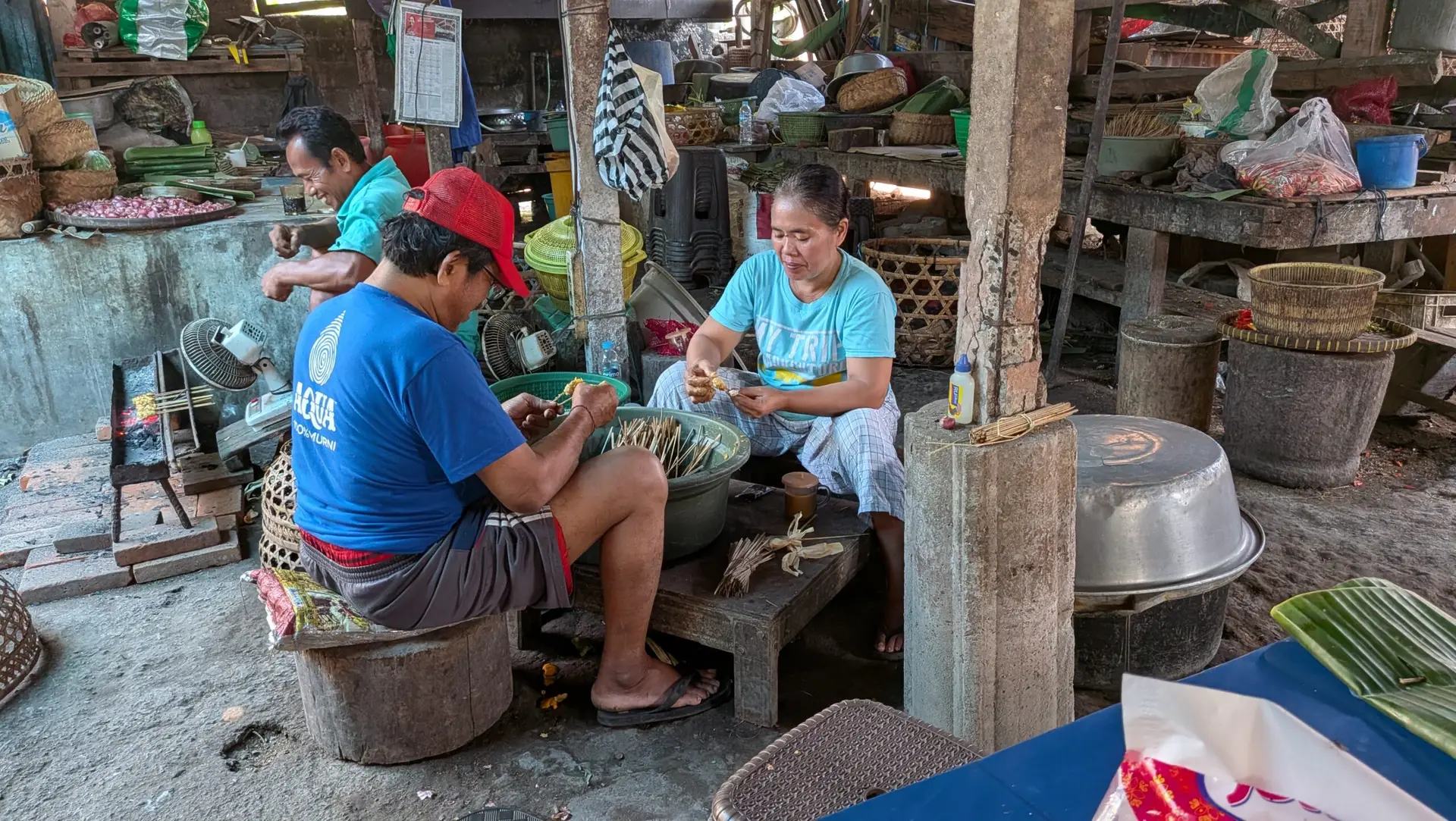
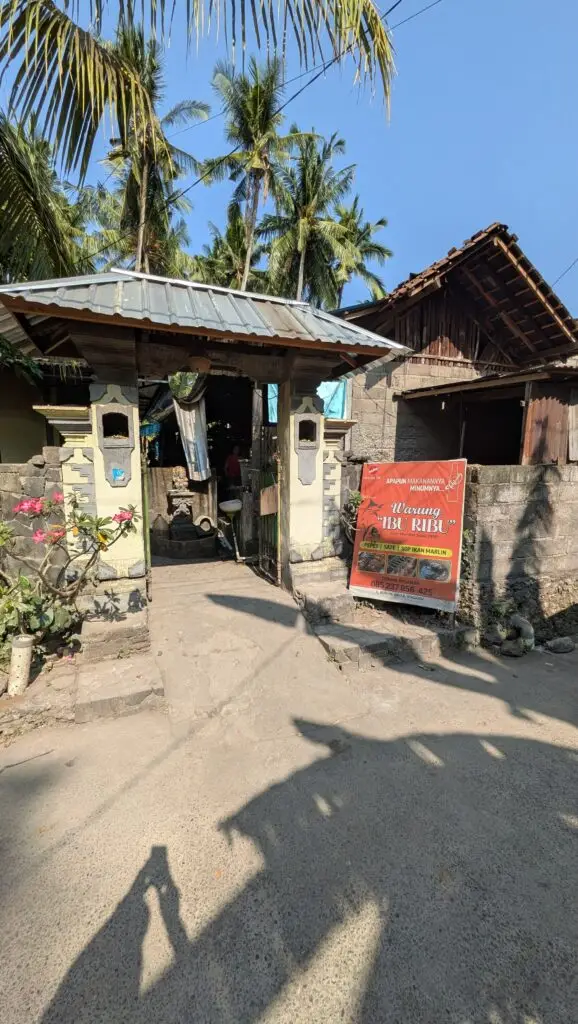
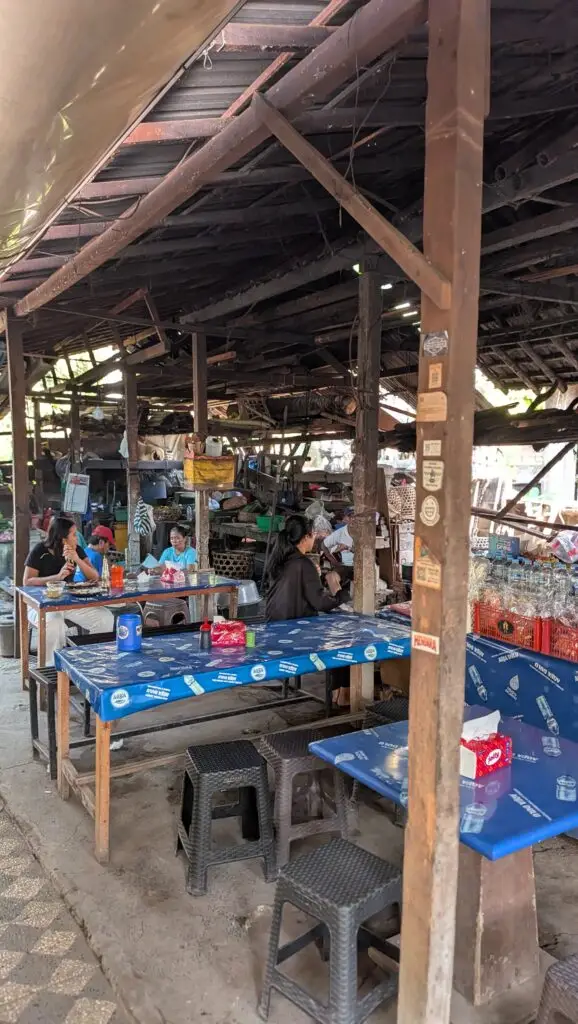
Runa knew a little warung near the coast that specialized in marlin. A warung is a small, usually family-run Indonesian restaurant, and this one was about as authentic as you could get.
It was called Warung Ibu Ribu, located in the village of Sengkidu, near Candidasa.
According to the sign, it had been operating since 1950.
Seventy-six years!
The place was tucked away on a little road, and I doubt I ever would have found it without Runa.
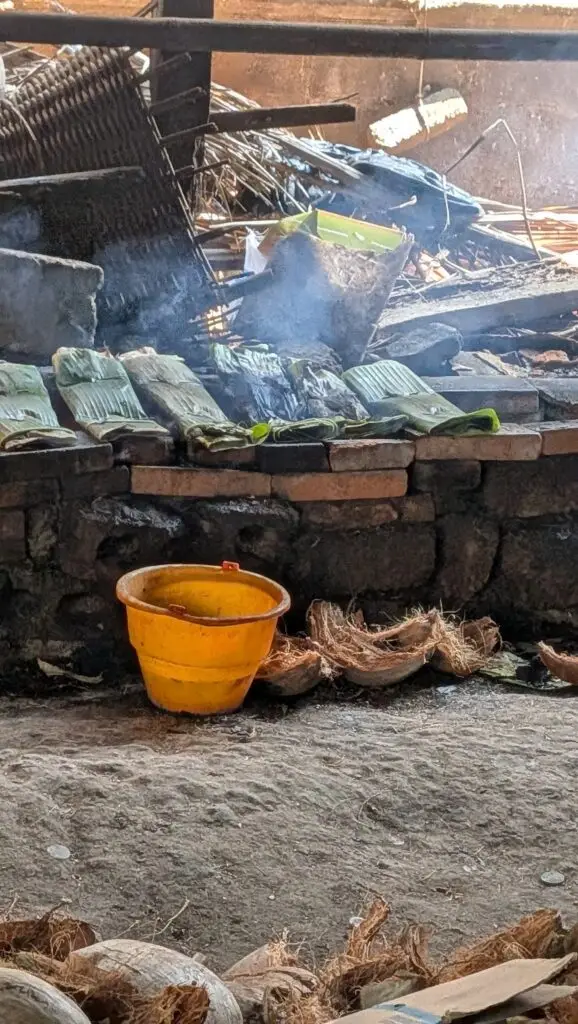
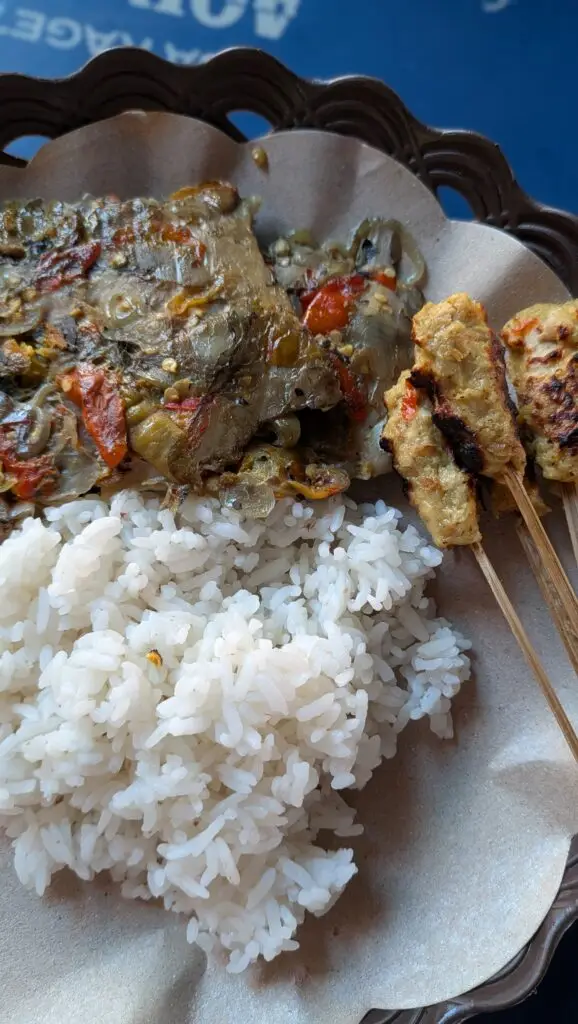
The specialty was marlin prepared three different ways: satay grilled over hot coals, fish wrapped in leaves and cooked over coconut husks, and a spicy fish soup.
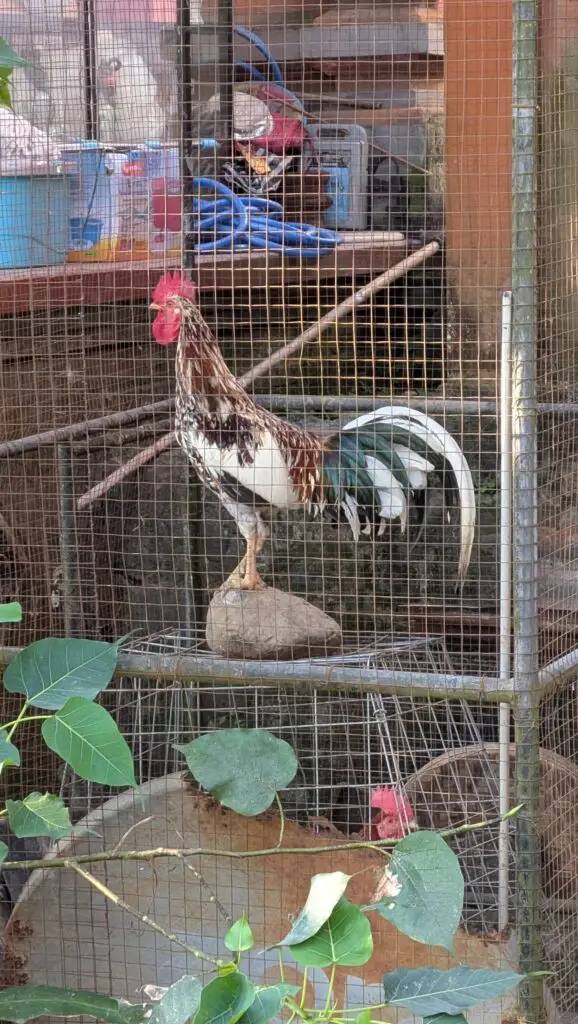
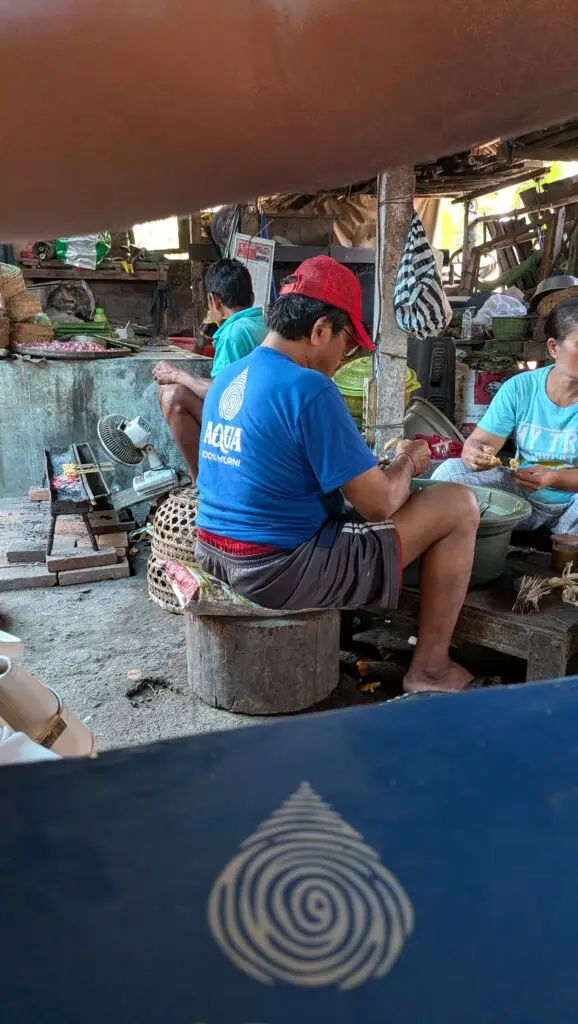
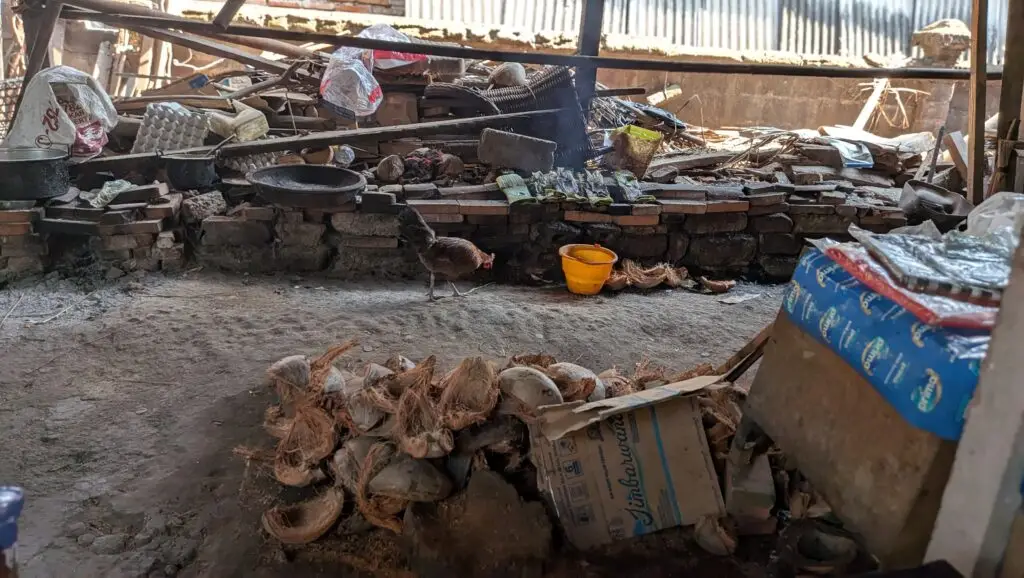
We watched the cooks prepare our lunch while chickens wandered around the cooking area.
Everyone was speaking Balinese, which is different from the Indonesian language I’d been trying to learn.
There wasn’t much English being spoken, and that was part of the charm.
Runa and I sat down to enjoy our lunch.
Everything was delicious, although some of it was pretty spicy.
Having recently experienced a minor case of what they call Bali belly, I decided not to push my luck. I didn’t finish everything, but what I ate was wonderful.
A bottle of sweet tea helped cool things down.
It was one of my favorite experiences of the day.
Nothing fancy. Just good food, friendly people, and a family restaurant that had been feeding the locals since 1950.
A Strange Fruit from Java
Along the way, we also stopped at a roadside fruit stand where I was introduced to something I’d never seen before.
It’s called lontar, also known as siwalan, a fruit particularly popular in Java.
From the outside, it looks like a small, dark coconut with a tough shell. But when you open it, there are translucent, jelly-like pieces inside.
The flesh is slightly sweet, watery, and refreshing, with a texture somewhere between a lychee and young coconut.
The vendor also had bottles of a sweet drink made from the sap of the lontar palm.
Another first for this gringo.
And another reason I enjoy getting away from the tourist areas.
Another Festival, Another Miss
After lunch, we headed back toward Sanur.
But we weren’t finished exploring.
We’d learned that the Klungkung Heritage Festival was taking place in Semarapura, the historic capital of the former Kingdom of Klungkung.
The festival was supposed to feature traditional dancing, music, cultural performances, and celebrations of the region’s royal heritage.
Since we’d missed the stick fighting, we figured we’d try our luck.
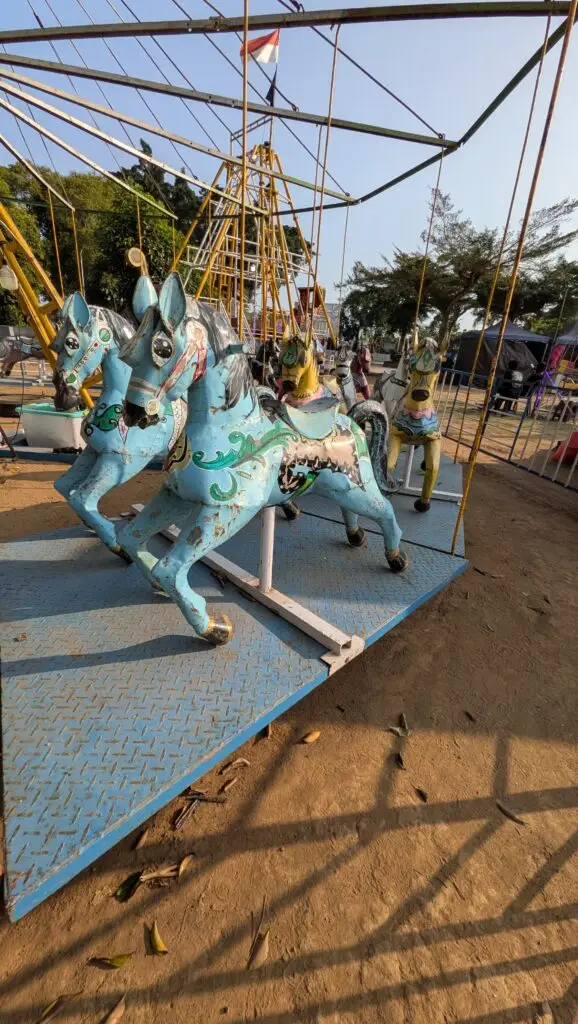
When we arrived, the festival grounds were being prepared. There were food vendors, amusement rides, and plenty of activity.
Unfortunately, the actual festivities weren’t scheduled to begin for another two hours.
Strike two.
But once again, what we discovered turned out to be more interesting than what we’d originally come to see.
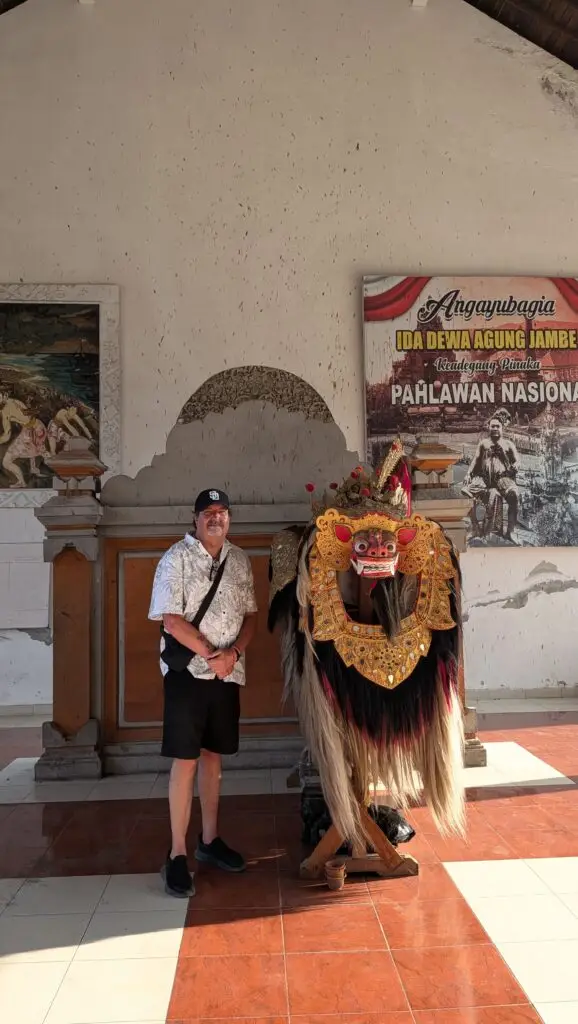
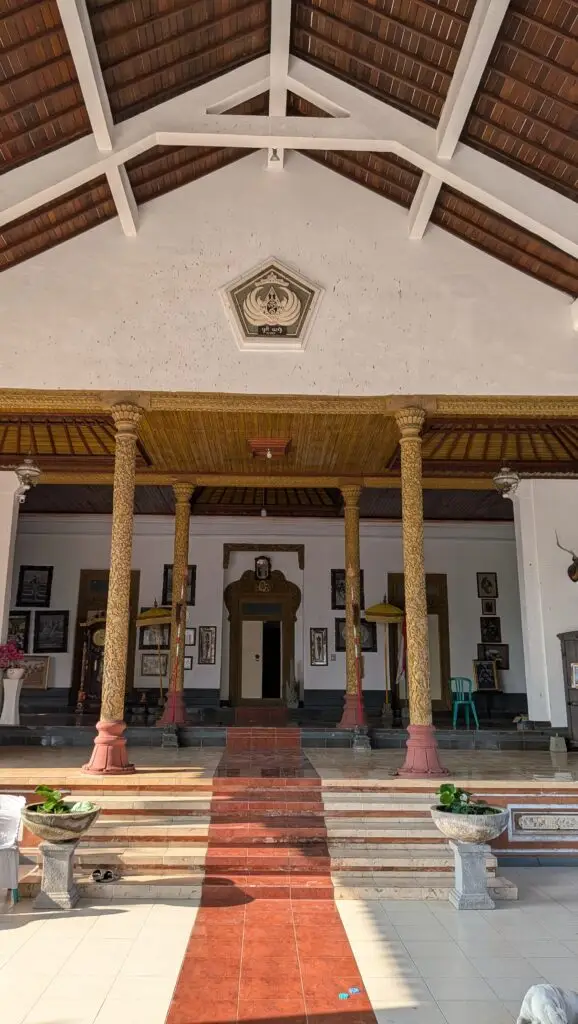
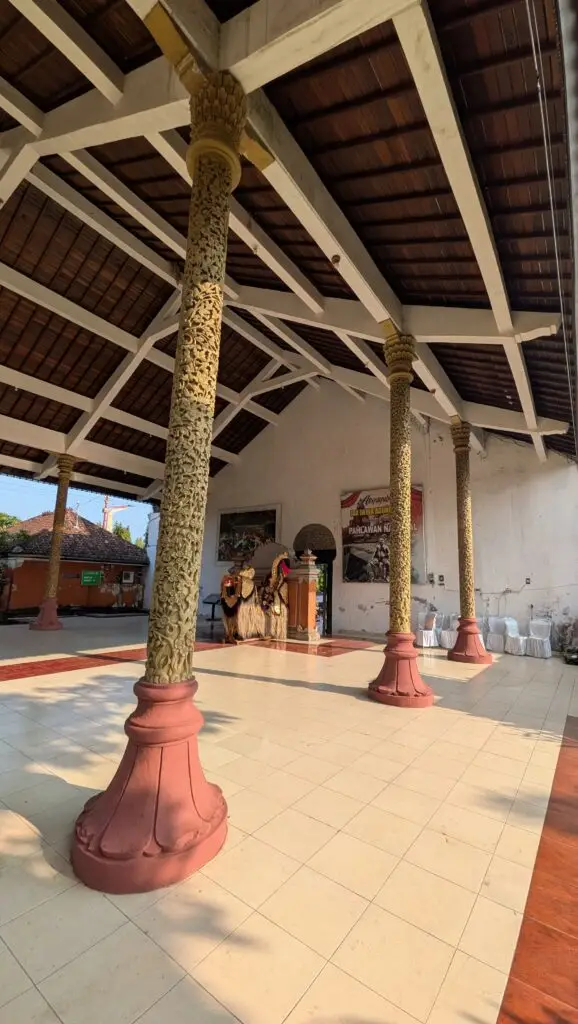
Across from the park was a historic royal ceremonial compound associated with the former Kingdom of Klungkung.
Klungkung was once considered the most prestigious of Bali’s kingdoms, and its rulers held a special place in the island’s royal hierarchy.
We were fortunate to be allowed inside the ceremonial grounds, which we were told are open to the public only on special occasions.
And here’s where things got interesting.
Apparently, members of the royal family, including the king and queen, were inside preparing for the evening’s festivities.
We didn’t actually see them, but we were told they were there, just beyond the doors.
So there I was, wandering around a historic Balinese royal compound, with royalty supposedly waiting in the next room.
Not something that happens every day.
You Must Be the King!
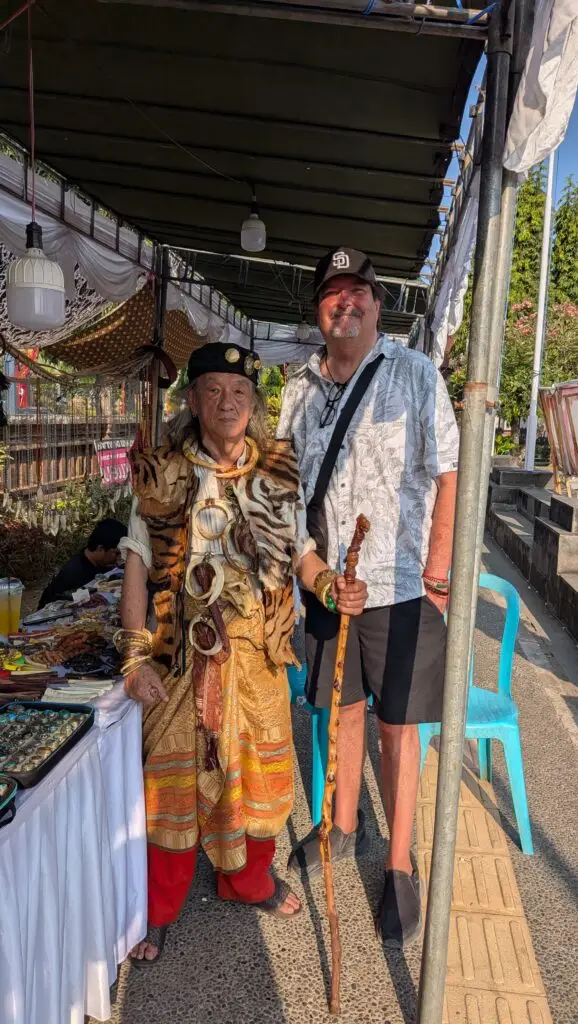
While exploring the festival grounds, I met one of the most colorful gentlemen I’ve encountered anywhere in my travels.
He was dressed in elaborate traditional clothing, covered in ornate jewelry, animal teeth, bones, and a striking headpiece.
He was selling traditional weapons, knives, clubs, and other artifacts, reportedly from Borneo.
He looked like he’d stepped straight out of another century.
Naturally, I couldn’t resist.
“You must be the king!” I told him.
He seemed to enjoy the joke.
Later, I asked AI if it could identify his unusual clothing and appearance.
It suggested he might be a traditional shaman associated with one of Borneo’s Indigenous Dayak communities.
I have no way of confirming that, but it certainly added to the mystery.
He was quite a character, and meeting him was another unexpected pleasure of the day.
The Royal Procession
Eventually, it was time to head back to Sanur.
We’d been traveling most of the day, and the festival still hadn’t started.
As we were leaving, we turned around and looked back toward the royal compound.
And there they were.
A procession of people dressed in beautiful traditional Balinese clothing was emerging from the grounds and heading across the street toward the festival.
We couldn’t be certain, but it certainly looked like members of the royal household were being escorted to the evening’s celebration.
The very people we’d been told were inside!
Unfortunately, we were already on our way.
Strike three.
No stick fighting.
No heritage festival performances.
And we missed what might have been our chance to see Balinese royalty up close.
But you know what?
I wouldn’t have changed a thing.
Finding the Real Bali
What I took away from the day wasn’t disappointment over missing two festivals.
It was the realization that I’d finally gotten off my beach lounge chair and discovered a side of Bali that most visitors never see.
I’d traveled through remote villages and winding mountain roads, explored a magnificent royal water palace, eaten traditional food at a warung established in 1950, tasted a strange fruit from Java, wandered through historic royal grounds, and met some fascinating people along the way.
But more importantly, I began to understand how Bali developed into the remarkable place it is today.
For centuries, this island was divided into separate kingdoms, many isolated by mountains, foothills, jungles, and difficult roads.
Each kingdom developed its own traditions, culture, and identity. Some became wealthy and powerful, building magnificent palaces and temples. Others remained small and isolated.
And much of that history is still alive today.
You can see it in the temples, ceremonies, architecture, villages, and people.
It’s easy to spend your time in Bali enjoying the beaches, restaurants, bars, and beautiful resorts.
Believe me, I know.
But there’s another Bali out there, and sometimes you have to get off your butt and go looking for it.
A special thanks to Yudi and Runa for making this such an enjoyable adventure. Between the karaoke, conversations, laughter, and unexpected discoveries, they made a long day on the road one I’ll remember for a very long time.
We didn’t see the stick fighting.
We missed the festival.
And we almost met royalty.
But I came away with something much better.
I went looking for two festivals. Instead, I found Bali.